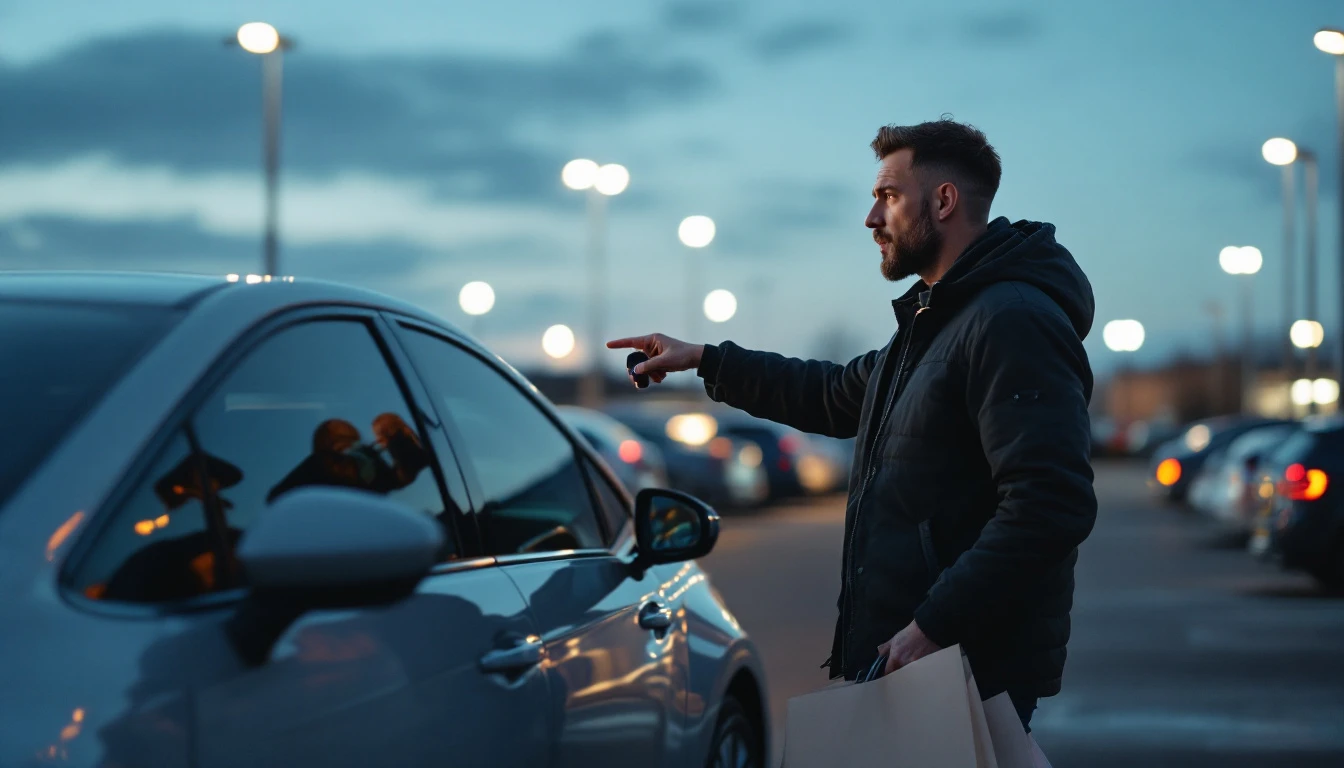
First: is the car refusing, or failing?
These are two different situations and the car usually tells you which one you are in.
A car that is refusing gives feedback. The horn sounds a short double note, there is a rapid chirp, the lights flash a different pattern from usual, or the locks cycle down and straight back up. That is the vehicle telling you a condition has not been met. Nothing is broken.
A car that is failing gives none. You press lock and nothing whatsoever happens — no lights, no sound, no movement — or some doors lock and one does not.
Do not walk away from either. The habit worth building is to watch for the lights and listen for the locks every single time, because the alternative is discovering the car was unlocked when something is missing from it. The National Insurance Crime Bureau puts locking the vehicle and taking the keys with you at the very first layer of its theft-prevention advice, ahead of any alarm or tracking device.
The three refusals: a door ajar, a key inside, the ignition on
Something is not fully latched. Most vehicles will not arm, and many will not lock, with a door, the hood, the trunk or the tailgate open. The catch is that the car goes by its switches, not by your eyes: a door that looks shut but sits on the first click of the latch, a tailgate resting on a strap or a grocery bag, or a hood that was dropped rather than pushed closed. Check the dash for a door-ajar indicator, then open and firmly re-close every door, the hood and the tailgate. If the tailgate is the one that will not latch, our trunk and liftgate guide covers that mechanism.
A key is still inside the car. Vehicles with a smart key are built to resist locking a key inside. If a second fob is in a bag on the back seat, in a jacket on the passenger seat, in the cup holder or in the cargo area, the car detects it and refuses, often with a warning tone. This catches families constantly — one driver’s fob in the diaper bag, the other pressing lock from outside. Find the second key before assuming a fault.
The ignition is still on. With push-button start it is easy to leave the vehicle in accessory mode, or with the engine quietly running on a hybrid, or with the shifter not fully in Park. Most cars will not lock from the fob in that state. Look at the dash before you get out: if the instruments are lit, the car is not off.
A fourth, minor one: some vehicles are set to re-lock or re-unlock automatically, or to unlock only the driver door on the first press. These are settings, changed in the vehicle menu, and the owner’s manual lists them. A car that “locks itself again” or “only unlocks one door” is usually doing what it was configured to do.
The interior switch test
If the car is not refusing for one of those reasons, do this before anything else. Sit in the driver’s seat with all the doors shut and press the lock switch on the door panel.
Every door locks from the switch. The actuators, the wiring to them and the fuse that feeds them are all working. The fault is in getting the command from the fob to the car: the fob, its battery, the receiver, or the car’s recognition of that fob.
One door does not lock from the switch. The fault is inside that door, almost always the lock actuator. The fob is not the problem and a new fob will not fix it.
No door locks from the switch. The fault is central: a fuse, the body control module, or the supply to it. Again, not the fob.
This single test stops the most common wasted purchase in this whole area — a replacement fob bought for a car whose actual fault was one door actuator.
If the fault is on the fob side
The coin cell. A weak cell shortens range first, so the classic pattern is that lock works when you are standing at the door and fails from across the car park. A fresh cell is a few dollars. Our guide to a key fob that only works up close covers what else shortens range if a new cell does not cure it.
A worn lock button. Lock and unlock are separate switches on the fob’s circuit board, and one can fail while the other carries on. If unlock works reliably from distance and lock does not work at all, press the lock button harder or at an angle — if that produces an occasional response, the contact under that button is worn. That fob is on borrowed time.
The second-fob test. Try your other key. If the spare locks the car normally, the daily fob is the fault. If neither locks it and the interior switch does, the fault is in the car’s receiver or its recognition of the keys.
Interference. If it only fails in one place — one car park, one street, outside one building — and works everywhere else, the fob is healthy and something nearby is drowning it out. Fobs are certified under FCC equipment authorization rules and must accept interference from other radio sources. Whatever the cause, the response is the same: do not leave until you have seen the car lock, and use the mechanical key if it will not.
A fob the car has forgotten. After a flat 12-volt battery or a battery change, a vehicle can lose its stored fob registrations. Typically the remote buttons stop working while the car still starts, or the reverse. Re-registering is labour with no part. Our keyless entry repair guide goes through the fob-side faults in more depth.
If the fault is on the car side
A single door actuator. The small motor inside the door that moves the lock. It usually gives notice: a buzz or a grind where there used to be a clean clunk, a door that locks on the second attempt, or one that works when warm and not when cold. Because the actuator on many vehicles also contains the switch that reports whether the door is locked, a failing one can make the whole car refuse to arm.
A door-ajar switch that lies. If the dash shows a door open that is plainly shut, the switch in that latch has failed and the car will keep refusing to lock or arm. Interior lights that stay on and a battery that goes flat overnight are the companion symptoms.
The 12-volt battery. A weak battery produces erratic central locking before it produces a no-start. If the locks have become slow or inconsistent on every door at once, have the battery load-tested.
A fuse or the body control module. When nothing locks from the fob or the switch, start with the central locking fuse listed in the owner’s manual. If the fuse is good, the body control module — the computer that receives the request and drives the locks — is next. A module that has lost synchronisation needs a relearn; one that has failed needs replacing and configuring to the VIN. They look identical from outside, and our relearn and module programming cost guide explains how to avoid paying for the wrong one. For worked examples see our Cadillac body control module guide and our Ram wireless ignition module guide, where a module fault is routinely mistaken for a bad key.
The mirror-image problem. If the car locks but will not unlock, the diagnosis runs differently; see our guide to a door that will not unlock with the key or fob.
How to secure the car tonight
Use the mechanical key. Every fob with push-button start has a metal blade inside it, and the driver door has a key slot, sometimes behind a small cover. On many vehicles turning the key in the driver door locks every door; on others it locks only that one.
If the key locks only the driver door: lock the other doors from inside using the interior switch or the individual door buttons, get out through the driver door, and lock that one with the blade.
If one door will not lock at all, the car cannot be fully secured. Take valuables out, park where it can be seen, and get it looked at promptly. Be aware that some insurers ask whether a vehicle was locked when assessing a theft claim.
Test the blade today, not on the night you need it. On a surprising number of spare fobs the emergency blade has never been cut. If yours will not turn the door lock, having it cut to the factory code from the VIN is the cheapest item on this page.
What each outcome costs in Grand Prairie
All figures are as of October 2026, all in, at your address, with no separate call-out fee inside the core service area.
Re-closing a door, finding the second key, switching the car off: nothing.
New coin cell: a few dollars.
Emergency blade cut to code: $65–$120.
Diagnostic session with a full module scan: $95–$160, credited against the work that follows.
Re-registering fobs the car has forgotten: $95–$180.
Replacement fob, supplied and programmed, with a working key present: $150–$300 on a mainstream vehicle, $180–$420 on a premium or European one. Our key fob replacement cost guide breaks that down.
Body control module configured to your VIN: $220–$420, with the module itself priced separately.
A door lock actuator or latch means taking the door panel off, which on most vehicles is a body or general repair shop job, priced by the shop that does it. We will tell you on the phone if that is where your fault sits rather than sending a technician to say it in person. After hours add roughly $20–$40; outlying addresses $20–$50.
When to call, and what to have ready
Call when: the doors, hood and tailgate are confirmed shut, no second key is in the car, the ignition is off, a fresh coin cell made no difference, and the car still will not lock from the fob — or when the interior switch test shows the fault is central.
Have three answers ready, because they usually identify the fault before anybody is dispatched: does every door lock from the interior switch, does the second fob behave any differently, and does the car give any feedback — a honk, a chirp, a light pattern — when you press lock.
Choose the shop with the same care as the repair. Texas locksmiths are licensed through the DPS Private Security Program, technician certification standards are published by ALOA, and the FTC advises treating a headline price well below the going rate as a booking device rather than a quote. Open recalls affecting door latches and locks can be checked free against your VIN at NHTSA, and are dealer work. See keyless entry repair, key fob replacement, BCM programming, car key programming or dealer-level diagnostics.
A Real-World Example
Operator: A representative Grand Prairie case: a family SUV with push-button start that began refusing to lock from the fob, sounding a double horn note each time, on and off over about a week.
Before:
- Lock pressed from outside produced a double honk and no locking; unlock worked normally
- Intermittent — some days it locked without complaint
- Owner suspected the fob and had replaced its coin cell with no change
What changed:
The pattern was worked through on the phone before anyone was dispatched. Feedback from the car meant a refusal rather than a failure. The doors, hood and tailgate were confirmed latched, and the owner was asked where the second fob was. It was in a gym bag in the cargo area, and the days the car locked normally were the days the bag was not in the vehicle.
Results:
- Fault resolved on the phone at no charge
- No fob purchased and no visit required
- Second fob moved to a hook in the house
- Emergency blades on both fobs tested in the driver door, one found never cut and booked for cutting to code
Net: A car that honks when you press lock is telling you something, and here it was telling the owner that a key was still inside. The intermittent pattern was the clue: the fault came and went with the gym bag, not with the fob.
What Experts Say
“If the car makes a noise when you press lock, I already know it is not the fob, because a dead fob cannot make the car honk. So I ask what it is doing, then I ask where the other key is. After that I ask one more question — does it lock from the switch on the door — and between those three I can usually tell someone whether they need me, a body shop, or nobody at all. The call I try hardest to prevent is the one where someone has already bought a fob for a car with one bad door actuator.”
The National Insurance Crime Bureau consistently lists locking the vehicle and removing the keys as the first layer of theft prevention — which is why a car that will not lock deserves attention the same day rather than when it is convenient, and why confirming the lock visually every time matters more than any single repair.
Frequently Asked Questions
Why won’t my car lock when I press the key fob?
Most often the car is refusing on purpose: a door, hood or tailgate is not fully latched, a second key or fob is still inside the vehicle, or the ignition is still on. If none of those applies, check the fob’s coin cell, try your second fob, and press the interior lock switch to see whether every door locks from inside.
Why does my car honk or beep when I try to lock it?
That is a warning, not a fault. The car is telling you a condition has not been met, usually a door or tailgate ajar or a smart key detected inside the cabin. Re-close everything firmly and look for a second fob in bags, coats and the cargo area.
My key fob unlocks the car but will not lock it. Is the fob broken?
Possibly. Lock and unlock are separate switches inside the fob, and one can wear out before the other. Try your second fob: if it locks the car normally, the first fob’s lock button has failed. If neither locks it but the interior switch does, the fault is on the car side.
How much does it cost to fix a car that will not lock with the fob?
In Grand Prairie as of October 2026: nothing if it is a door ajar or a key inside, a few dollars for a coin cell, $95–$180 to re-register fobs the car has forgotten, $150–$300 for a replacement fob on a mainstream vehicle or $180–$420 on a premium one, and $220–$420 to configure a body control module. A full module scan is $95–$160 and is credited against the work.
All the doors lock except one. Do I need a new key fob?
No. One door failing while the others lock means the fault is inside that door, almost always the lock actuator. A new fob will not change it. Actuator replacement involves removing the door panel and is usually a body or general repair shop job.
How do I lock my car if the key fob will not do it?
Use the mechanical blade inside the fob in the driver door. On many cars that locks every door. If it locks only the driver door, lock the others from inside with the interior switch, get out through the driver door and lock it with the blade.
Can a weak car battery stop the doors locking?
Yes. A tired 12-volt battery makes central locking slow and inconsistent on every door before it causes a no-start. If the locks have all become sluggish together, have the battery load-tested before replacing anything else.
The Bottom Line
A car that will not lock from the key fob is usually refusing rather than failing: a door, hood or tailgate not latched, a second key inside, or the ignition still on. Rule those out, then press the interior lock switch — if every door locks from inside, the fault is on the fob or receiver side; if one door does not, it is that door. In Grand Prairie as of October 2026, a replacement fob is $150–$300 on a mainstream vehicle and $180–$420 on a premium one, a full module scan is $95–$160 credited against the work, and re-registering forgotten fobs is $95–$180. Until it is fixed, lock the car with the mechanical blade and watch it lock every time.
Next Steps
Re-close every door, the hood and the tailgate, find your second fob, and try the interior lock switch. If the car still will not lock from the fob, call (214) 949-1847 with the year, make and model and the answers to three questions: does every door lock from the interior switch, does the second fob behave differently, and does the car honk or flash when you press lock. See keyless entry repair, key fob replacement and BCM programming.