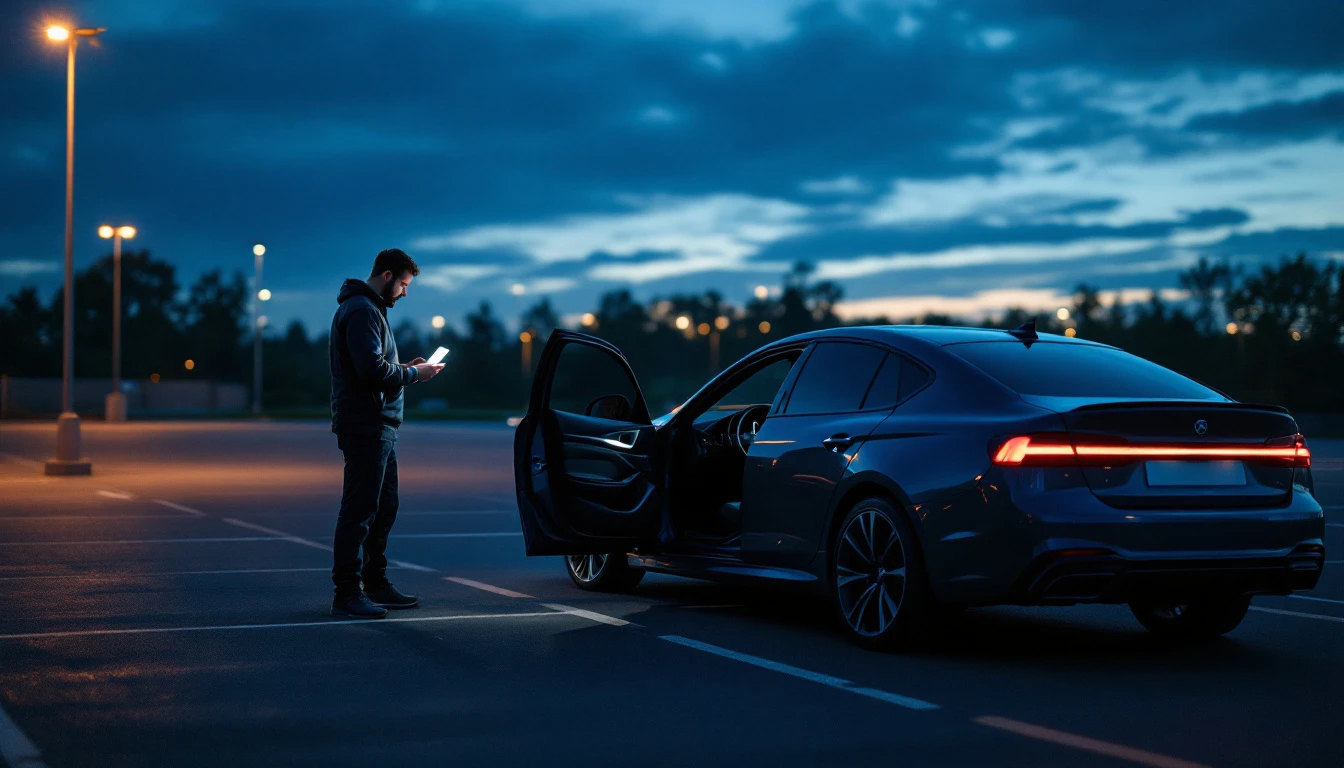
Why the Stinger and K900 are not priced like other Kias
Both cars sit on Kia's rear-wheel-drive premium architecture rather than the front-drive platform underneath a Forte, Soul, Sportage or Sorento. That is not marketing language — it means different modules, different fob variants, and in practice a different procedure with different tooling than the volume Kia line-up.
The K900 is the flagship saloon: low volume, richly equipped, and specified with the kind of comfort and access electronics that make everything on the car more involved to work on. The Stinger is the rear-drive fastback sport saloon, sold in respectable numbers here and disproportionately represented on DFW roads relative to the national picture.
The result is a pricing band that sits between mainstream Korean and European luxury. It is not a Forte and it is not a Mercedes. Owners who have priced a key for a family member's Sportage and expect the same number are the group most likely to feel ambushed — not because they were overcharged, but because they compared against the wrong vehicle.
Anyone quoting your Stinger without the VIN is quoting the Kia badge, not your car. Ask a shop what fob variant your VIN takes; a shop that can answer has looked, and a shop that cannot is guessing at a number it intends to revise later. Our Kia key replacement page covers the range as a whole.
What all keys lost actually means on these cars
With a working key in hand, adding a second is a short routine: the vehicle already trusts a credential, and the new one is registered alongside it. With no working key, that shortcut does not exist. Authority has to be established from outside the vehicle, through the gated framework maintained by the National Automotive Service Task Force, and that gate is deliberate — it exists so that a stranger cannot commission a key for a car they do not own.
That is why proof of ownership is mandatory: photo identification plus title, registration, or an insurance document naming you and matching the VIN. A technician who does not ask is a technician who would do the same for whoever took your car next, and that alone should end the conversation.
Expect 75–140 minutes on site for these two vehicles — longer than the 60–110 typical of mainstream Korean models, because of the platform and the access sequence involved. That time is one visit at the vehicle, not a tow plus a service-drive queue.
A good technician also runs a pre-flight check before committing to the full job, because a meaningful share of “all keys lost” calls are not. See the next section — it is worth reading before you book anything.
Four things to check before you pay for all-keys-lost
One: the coin cell. A fob whose battery is too weak to transmit is indistinguishable from a lost key at the door handle. These vehicles support a backup position — holding the fob at the marked area near the start button lets the car read the transponder inductively. If the car starts that way, you need a three-dollar battery, not a $500 job.
Two: the emergency blade and the door cylinder. The smart key contains a mechanical blade and the driver door has a cylinder for it. Getting into the cabin is often the difference between a calm evening and a panic, and it costs nothing if you already have the fob in your hand.
Three: search the car properly. A fastback saloon has a boot lip, deep seat rails, and a centre console that swallows small objects. On a K900 add the rear seat area, which is where passengers sit and where things get placed and forgotten. Twenty minutes of genuine searching resolves more of these calls than anyone likes to admit.
Four: the 12-volt battery. A vehicle that has sat for weeks with a marginal battery will refuse to acknowledge a perfectly good key, and the symptom reads exactly like a key fault. If the interior lights are dim or the car is silent, that is a power condition. Our key fob troubleshooting guide works through the whole diagnosis order.
Grand Prairie pricing, as of August 2026
Kia Stinger, all keys lost: $420–$620 depending on model year and fob variant. Kia K900, all keys lost: $480–$700. Spare smart key with a working key present, either car: $230–$380. Second key at the same all-keys-lost visit: roughly a third of the first — the access work is already done, and this is the single best-value moment to buy a spare you will ever have.
Those figures include the fob, the cut emergency blade, every registration the vehicle requires, verification, and the mobile trip inside the core service area. No tow, because none is needed.
Take the second key. On an all-keys-lost job it is the cheapest key that vehicle will ever be offered, and leaving with one key puts you back in the same position you are in right now — one battery failure away from a repeat of today. The economics are not close.
For the broader picture across makes and scenarios, our 2026 Grand Prairie cost guide and the all-keys-lost guide lay out the bands. For the volume end of the Kia range and a different failure mode entirely, see our Kia Forte and Soul ignition repair guide.
What the visit looks like from the kerb
Documents first. The technician checks your identification against title, registration, or insurance matching the VIN, and records that the check was made. This is not bureaucratic theatre — it is the reason a legitimate shop can hold the tool access that makes the job possible at all.
Then access to the cabin, then the emergency blade cut to factory code from the VIN, then the diagnostic connection and the all-keys-lost routine appropriate to the platform and model year. On completion the new fob is registered for immobilizer authority, remote functions, and passive entry — three separate registrations, each verified separately.
Verification on these cars specifically should include passive entry at every door, boot release, and engine start with only the new key present. Where a second key is being programmed at the same visit, both should be tested independently with the other out of range. A fob that behaves perfectly while its sibling sits on the roof tells you nothing.
Total time: 75–140 minutes for all-keys-lost, 25–45 for a spare with a working key present. If a shop tells you a Stinger all-keys-lost is a twenty-minute job, they have quoted you a Forte and have not looked at your car.
The bait-quote problem on premium Kias
The complaint pattern on these two vehicles is consistent and predictable: a low telephone number for “a Kia”, a technician who arrives and discovers a rear-drive premium platform, and a revised figure delivered to somebody who is stranded and has already waited an hour. The Federal Trade Commission's guidance on locksmith scams describes exactly this sequence, and it is not confined to house lockouts.
The defence is simple and takes one minute. Give the VIN on the phone. Ask for the quote against the VIN. Ask what fob variant your car takes and whether the price includes the cut emergency blade and all registrations. Ask for the licence number — in Texas, locksmith licensing runs through the Department of Public Safety Private Security Program, not TDLR, whatever a directory listing may say.
Ask one more thing: whether they will need to see proof of ownership. A shop that says no is telling you something important about how they operate, and it is not something in your favour as the registered owner of a car somebody could try to take.
A shop that answers all four questions plainly on the phone is very unlikely to surprise you in the driveway. Confident vagueness reliably predicts an unpleasant conversation on arrival. Our can a locksmith make a key without the original page explains the process in the terms a legitimate shop will use.
Mobile versus dealer on a Stinger or K900 key
The dealer route on all-keys-lost begins with a flatbed, because the car cannot be driven to the service drive. Per AAA roadside and repair-cost research, avoiding that tow is the largest single structural saving available on an immobilised-vehicle job, and it is a saving that exists before any comparison of labour rates or parts pricing.
The second structural saving is parts sourcing through trade channels rather than a manufacturer parts counter at list price. The third is scheduling: mobile is same-day at the vehicle's location, and a dealer appointment for a low-volume model can involve waiting on a part that is not on the shelf, because K900s in particular are not stocked deeply anywhere.
The dealer genuinely wins on warranty work, on recall or campaign work that has to be recorded in the manufacturer's system, and on very recent configurations where programming access routes through manufacturer-side authorisation. An honest shop names those categories rather than pretending they do not exist — and confirms your specific VIN before dispatch rather than discovering the limitation in your car park.
For a comparable premium-platform key job on another brand, our Genesis GV80 and G70 guide covers the sister marque, and for how the economics look on European luxury see our Mercedes key replacement in Grand Prairie guide.
A Real-World Example
Operator: A Grand Prairie owner lost the only key to a 2019 Kia Stinger GT at a weekend event, discovered the loss after the car park had emptied, and called three numbers found by phone search. Two quoted "$180 to $250 for a Kia key" without asking a single question about the vehicle.
Before:
- Two phone quotes given against a generic Kia price table with no VIN requested
- The car had come from a private sale with a single key and no spare ever cut
- Owner assumed the vehicle would need to be towed to a dealer and left overnight
What changed:
The third shop asked for the VIN before quoting, identified the rear-drive premium platform and the correct fob variant, and quoted $545 for all-keys-lost with a second key at $180 if taken at the same visit. On arrival the technician checked photo ID against the registration document, opened the cabin, cut both emergency blades to factory code from the VIN, ran the all-keys-lost routine, and registered two smart keys — verifying each independently with the other locked in the boot of a colleague's vehicle.
Results:
- Time on site: 108 minutes
- Total billed: $725 for all-keys-lost plus a second key programmed at the same visit
- No tow required — the vehicle was driven home from the car park the same evening
- Both fobs verified for engine start, remote functions, passive entry at all four doors, and boot release
Net: The two cheap phone quotes were priced against a front-drive Kia the owner does not own. Had he booked one of them, the realistic outcome is a technician arriving, revising to a similar or higher figure on the kerb, and an owner with no leverage at ten at night. The second key added $180 to a job that would cost $480–$700 on its own if bought later — the cheapest key that car will ever be offered.
What Experts Say
“The Stinger catches people out because it wears a Kia badge and drives like something else entirely, and the key work follows the car rather than the badge. When somebody tells me they were quoted two hundred dollars over the phone, I know exactly what happened — nobody asked for the VIN, so the price came off a table for a Forte. My rule is that I do not give a number for any Korean car until I have seventeen characters, because the difference between the front-drive line and the rear-drive line on the same phone call is three hundred dollars. And when I am already there with the tooling connected, the second key is the best money that customer will ever spend on that vehicle. I say so every time.”
Per ALOA's automotive certification standards and the NASTF vehicle security access framework, key programming coverage is determined by vehicle platform and configuration rather than by manufacturer badge, which is why VIN-level verification before dispatch is treated as standard professional practice rather than an optional courtesy.
Frequently Asked Questions
How much does all keys lost cost on a Kia Stinger in Grand Prairie?
As of August 2026, roughly $420–$620 for a Stinger and $480–$700 for a K900, depending on model year and fob variant. A spare with a working key present is $230–$380. A second key programmed during the same all-keys-lost visit is about a third of the first, which makes it the cheapest key that vehicle will ever be offered.
Why is a Stinger key more expensive than a Kia Forte key?
Because the two cars share a badge and not a platform. The Stinger and K900 sit on Kia's rear-wheel-drive premium architecture with different modules, different fob variants, and a different programming procedure. Any quote given for "a Kia" without your VIN has been priced against the wrong vehicle and will be revised in your driveway.
Does my Kia need to be towed to a dealer if all the keys are gone?
No. A credentialed mobile shop completes all-keys-lost where the vehicle sits — driveway, car park, or kerb. Expect 75 to 140 minutes on site for these two models. Avoiding the flatbed is the largest single saving on the job, before any comparison of parts or labour rates.
What proof of ownership do I need for a lost-key job?
Photo identification plus title, registration, or an insurance document naming you and matching the VIN. This is mandatory. A technician who does not ask for it would do the same for whoever tried to take your car next, and that is a reason to send them away rather than a convenience.
My Stinger will not respond to the fob at all. Is the key definitely lost?
Not necessarily. Hold the fob against the marked backup area near the start button — the car can read the transponder inductively when the radio battery is too weak. If it starts, you need a coin cell. Also check whether the 12-volt battery is flat, because a vehicle with insufficient supply voltage refuses good keys and the symptom is identical.
Should I have a second key programmed at the same visit?
Yes, on an all-keys-lost job especially. The expensive part of the work is the access, and it has already been performed. A second key at that moment is roughly a third of the price of the first. Leaving with one key puts you exactly one dead battery away from repeating today at full price.
The Bottom Line
A Kia Stinger or K900 is a premium rear-drive car wearing a mainstream badge, and its key work is priced accordingly — $420–$700 for all keys lost in Grand Prairie as of August 2026, against $230–$380 for a spare while a working key still exists. Give the VIN before you accept any quote, expect to show proof of ownership, and take the second key while the technician is already there.
Next Steps
Call (214) 949-1847 with your VIN and model year — for these two cars the VIN is what makes the quote real. See Kia key replacement Grand Prairie, lost car key service, and smart key programming for the underlying services.
Sources cited in this article
- Associated Locksmiths of America (ALOA) certification
- National Automotive Service Task Force (NASTF)
- FTC consumer guidance on locksmith scams
- AAA roadside assistance and repair-cost research
- Texas DPS Private Security Program
- SAE International vehicle security standards
- National Highway Traffic Safety Administration (NHTSA)
- U.S. Bureau of Labor Statistics OEWS data