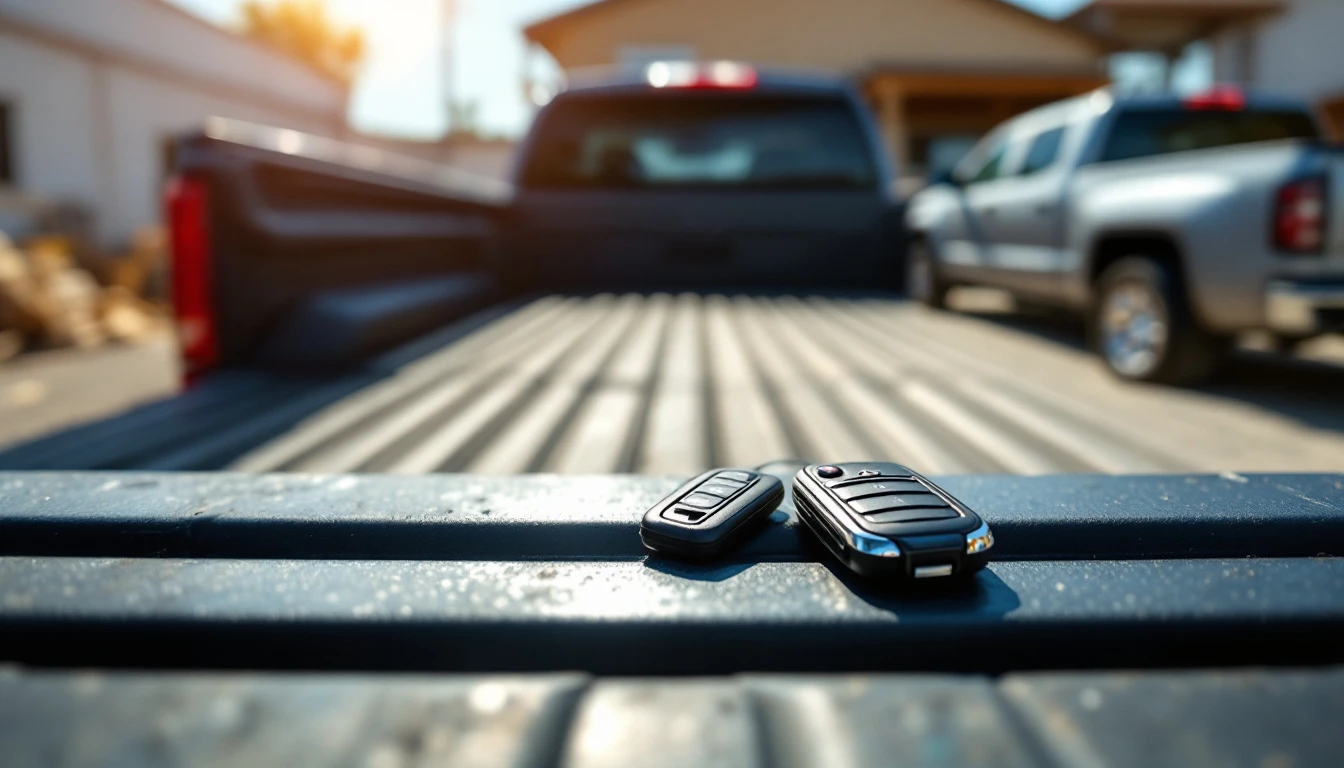
Two trucks wearing the same badge
The Frontier is unusual. Most nameplates get a redesign every five or six years and drift gradually through key technology. The D40 Frontier did not — it sold in near-identical mechanical form from 2005 all the way to 2021, which means a seventeen-model-year run of trucks on a bladed NATS transponder key: a metal key with a chip in the head, read by an antenna ring around the ignition cylinder.
Then the 2022 D41 arrived with a push-button Intelligent Key proximity fob, passive entry, and a rolling-code remote. Nothing about the key job carried over. The blade profile changed, the programming route changed, the parts changed, and the price changed.
The Titan tells a similar story with a softer edge. Earlier trucks run bladed transponder keys; later trucks and higher trims carry Intelligent Key fobs, and the transition is trim-dependent rather than a clean model-year line. A base Titan S and a loaded Titan Platinum Reserve from the same year can take different keys.
This is why the first question a competent shop asks is the VIN, not the year. Our Nissan key replacement page covers the full range, and the same split shows up on the passenger side of the lineup in our Altima and Rogue guide.
What NATS actually does, in plain terms
NATS is Nissan's anti-theft immobilizer system. In practical terms it means the engine will not run unless the vehicle recognises a specific electronic credential. Cutting a blade that fits the door and the ignition is easy; convincing NATS the key is allowed to start the truck is the actual work, and it is the reason a hardware-store copy turns the ignition and does nothing.
On the bladed generations, that credential lives in a transponder chip in the plastic head of the key. On the Intelligent Key trucks it lives in a fob that also handles passive entry and push-button start. Either way the registration happens through a diagnostic tool connected at the OBD-II port under the dash, with the vehicle's own security module deciding what to accept.
A detail that matters for cost: on many Nissan platforms, registering a new key wipes the previously registered set and re-registers everything present at that session. If you have a second working key you want to keep, it must be in the technician's hand during the visit. Leave it in a drawer at home and it stops working — a genuinely common and avoidable second call-out.
Our immobilizer programming page covers the underlying service, and car key programming covers the registration step for both key eras.
Grand Prairie pricing, as of August 2026
Bladed NATS transponder key, spare with a working key present: $150–$250. Bladed NATS key, all keys lost: $250–$420. Intelligent Key proximity fob, spare with a working key present: $180–$280. Intelligent Key, all keys lost: $300–$500.
Second key at the same visit: 30–50% of the first, and closer to a third on an all-keys-lost job — the access work is already done and the tool is already talking to the truck. Emergency blade or mechanical key cut only: $45–$85. Fob shell or button-pad transplant reusing your existing board: $60–$120, with no programming at all.
Those figures include the key or fob, the blade cut to factory code, every registration the truck requires, verification, and the mobile trip inside the core service area. Far Mansfield, Midlothian and other outlying addresses may add a $20–$50 trip charge. No tow is included because none is needed — all-keys-lost is completed at the vehicle.
For the picture across every make and scenario see our 2026 Grand Prairie cost guide, and for the sedan and crossover end of the Nissan range our Maxima and Murano spare key guide.
The long D40 run is good news for your wallet
A seventeen-year production run means an enormous installed base of identical keys, and volume drives parts cost down. The bladed NATS key on a 2005–2021 Frontier is one of the cheaper transponder keys on the road, and a credentialed shop will have the blank, the blade profile and the programming route as routine stock rather than a special order.
It also means the aftermarket knows the platform inside out. There is no exotic security gateway, no manufacturer-side authorisation step, and no bench work — the whole job is done through the OBD-II port in the driveway or the yard.
The flip side is age. A truck that has been keyed for fifteen years has a worn ignition cylinder and a worn key working against each other, and at some point the wear crosses a threshold where the key needs jiggling. That is a worn key far more often than a worn cylinder, and a fresh cut to the factory code from the VIN is both the diagnostic test and, usually, the fix.
When it genuinely is the cylinder — the key turns freely but nothing happens, or the cylinder binds with any key including a new one — that is a different job. Our ignition repair page covers it, and a technician can tell you which of the two you have inside a couple of minutes.
Before you buy a key: the false alarms
A meaningful share of “my truck will not start” and “the key stopped working” calls on these trucks are not key failures at all, and a competent technician runs the checks before selling you anything.
The fob battery is the first suspect on Intelligent Key trucks. A coin cell measures fine at rest and sags under transmission load, so the fob works at two feet and fails at ten. Nissan provides a backup: hold the fob against the start button and press the brake. If it starts, you need a $5 battery, not a $280 fob.
Trust loss after a dead battery or a jump start is the second. On these platforms an interrupted 12V supply can leave the security module in a state where it refuses an otherwise valid key. It reads as a lost-key event and is not one — a relearn resolves it with no new parts.
A cracked fob case is the third, and it is a work-truck classic. Moisture gets in through the crack and reaches the board weeks after the drop that caused it. If the buttons are worn or the shell is split but the board is clean, the correct repair is a shell transplant reusing your existing electronics — no programming, because the truck already knows that board. Ask for it by name; very few shops volunteer it. See our key fob replacement page.
What the visit looks like
A spare-key visit runs 20–40 minutes. VIN and trim confirmed, ownership verified, blade cut to factory code, diagnostic tool connected at the OBD-II port, new key registered, and — on the Intelligent Key trucks — every remote and passive-entry function checked afterwards. Bring every working key you own to the visit, for the re-registration reason above.
Verification should be done with the other keys well out of range. Engine start on the new key alone; remote lock and unlock at realistic distance rather than at arm's length; passive entry at each door that has it, plus the tailgate on a Titan. Skipping the passive-entry check is the most common shortcut and the most common callback.
All keys lost runs 60–110 minutes and begins with documents. Photo ID plus title, registration, or insurance matching the VIN — not optional, and not something a legitimate shop waives. On a company truck, that means paperwork tying the business to the vehicle and you to the business. Sort it out before the van arrives rather than while it waits in your yard.
You should get an all-in written figure before work starts, not a “service call” number that grows on arrival. Our mobile locksmith and lost car key pages set out what the visit covers.
Mobile versus dealer for a Nissan truck key
Nissan is among the best-supported platforms for credentialed mobile shops, and the structural case is simple. No tow is required even for all-keys-lost — and per AAA roadside and repair-cost research, avoiding a flatbed is the single largest structural saving on any immobilised-vehicle job. Parts come through trade channels rather than a parts counter at list. And same-day service at the truck beats a scheduled service-drive appointment for anyone whose truck is how they earn.
The dealer genuinely wins on warranty work, on recall or campaign work that has to be recorded in the manufacturer's system, and on the small set of very recent configurations where programming access routes through manufacturer-side authorisation. An honest shop names those categories rather than claiming “any Nissan, any year”, and checks your VIN before dispatch instead of discovering the limitation in your driveway.
The framework under which credentialed independents access vehicle security functions is maintained by the National Automotive Service Task Force; certification standards are published by ALOA; and Texas locksmith licensing runs through the DPS Private Security Program — not TDLR, despite what a great many directory listings still say.
On pricing honesty: an advertised “$29 car key” is not a price for a programmed proximity fob. The FTC's locksmith scam guidance documents the low-quote-then-revise pattern, and work vehicles are a favourite target because the owner is under time pressure. Our locksmith versus dealership comparison lays out the decision tree.
A Real-World Example
Operator: A Grand Prairie irrigation contractor called about a 2016 Nissan Frontier SV that had been running on one key since it was bought used four years earlier. The key had started needing a wiggle in the ignition, and the owner assumed the ignition cylinder was failing and budgeted for a replacement.
Before:
- Ignition required jiggling the key to start; intermittent no-crank on cold mornings
- Quoted "probably an ignition cylinder, $350-450 plus programming" over the phone by another shop, sight unseen
- No spare key had ever existed for the truck
What changed:
The technician cut a fresh bladed NATS key to the factory code from the VIN before touching the cylinder — a two-minute test that costs nothing if it fails. The new key turned cleanly with no wiggle, on the first attempt, which established that the cylinder was fine and the fifteen-year-old key was worn. The new key was then programmed as a working key, and a second key was cut and registered at the same visit as a genuine spare, with both keys present so the existing key stayed valid.
Results:
- Time on site: 34 minutes
- Two programmed NATS keys plus both blades cut: $230 total
- No ignition cylinder work required — the quoted $350-450 repair was not needed
- Truck left with two working keys where it had one worn one
Net: The cylinder was never the fault. A worn key and a worn cylinder feel identical from the driver's seat, and the cheap test — cut a fresh key to factory code and try it — distinguishes them in two minutes. The contractor spent $230 instead of a quoted $350–$450 that would not have fixed the actual problem, and gained a spare in the process.
What Experts Say
“People bring me a Frontier and say "it is a 2018", and that tells me almost nothing, because the D40 ran from 2005 to 2021 with the same bladed key and then the 2022 truck is a completely different animal with a proximity fob. Two jobs, two prices, one badge. So I ask for the VIN every time. The other thing on these older trucks is that a key that needs jiggling is nearly always a worn key, not a worn cylinder — the key is soft brass and the cylinder is not. Cut a fresh one to the factory code first. It costs almost nothing and it tells you the truth, and I have talked a lot of people out of an ignition repair they did not need that way.”
Per ALOA's automotive certification standards, key identification is properly resolved against the vehicle identification number rather than against nameplate or model year, because immobilizer architecture and blade profile are determined by platform and build configuration — which within a single long-running nameplate may vary substantially.
Frequently Asked Questions
How much is Nissan car key replacement for a Frontier or Titan in Grand Prairie?
As of August 2026, a bladed NATS transponder key spare runs $150–$250 and an Intelligent Key proximity fob spare runs $180–$280, both with a working key present. All keys lost runs $250–$420 for a bladed key and $300–$500 for an Intelligent Key. Those figures include the key, the cut blade, all registrations, verification and the mobile trip inside the core service area.
Why does my 2018 Frontier take a different key than my neighbour's 2022?
Because they are different trucks under the badge. The D40 Frontier ran from 2005 to 2021 on a bladed NATS transponder key; the 2022 D41 redesign moved to a push-button Intelligent Key proximity fob. The blade profile, the parts and the programming route all changed. That is roughly a $100 difference on a spare, which is why a quote should always be against your VIN.
Do I need to bring my other key to the appointment?
Yes, and this matters more on Nissan than on most makes. On many Nissan platforms, registering a new key re-registers the whole set present at that session and drops anything absent. If your second working key is in a drawer at home, it will stop working. Bring every key you own and want to keep.
Does a Frontier or Titan have to be towed if all keys are lost?
No. A credentialed mobile shop completes all-keys-lost where the truck sits — driveway, yard, jobsite or kerb — in roughly 60 to 110 minutes. Bring photo ID plus title, registration, or insurance matching the VIN. On a company truck you will also need paperwork tying the business to the vehicle.
My key has to be jiggled to start the truck. Is the ignition failing?
Usually not. On a truck that has been keyed for a decade or more, a worn key is far more common than a worn cylinder, because the key is the softer of the two. Have a fresh key cut to the factory code from the VIN and try it — that is both the test and, most of the time, the fix. If a brand-new key binds too, then the cylinder is genuinely the fault.
My Titan fob works sometimes and not others. What is going on?
Start with the coin cell, which reads acceptably at rest and sags under transmission load — that produces exactly this intermittent behaviour. Hold the fob against the start button and press the brake; if it starts, you need a battery. If a fresh cell does not fix it, look for a cracked shell letting moisture reach the board, which is the usual second cause on a work truck.
The Bottom Line
Nissan car key replacement on a Frontier or Titan is a $150–$280 spare and a $250–$500 all-keys-lost job in Grand Prairie as of August 2026 — and where you land inside those bands is decided by whether your truck is a bladed-NATS generation or an Intelligent Key one, which the badge will not tell you. Quote it by VIN, bring every key you own to the visit, and on an older truck with a sticky ignition have a fresh key cut before anybody quotes you a cylinder.
Next Steps
Call (214) 949-1847 with your VIN, model year and trim, and say whether your current key is a metal bladed key or a push-button-start fob. If the truck is a 2005–2021 Frontier with a sticky ignition, mention it — that may be a much cheaper job than you have been quoted. See Nissan key replacement Grand Prairie, car key replacement, and immobilizer programming for the underlying services.
Sources cited in this article
- Associated Locksmiths of America (ALOA) certification
- National Automotive Service Task Force (NASTF)
- AAA roadside assistance and repair-cost research
- FTC consumer guidance on locksmith scams
- Texas DPS Private Security Program
- SAE International vehicle security standards
- National Highway Traffic Safety Administration (NHTSA)
- National Insurance Crime Bureau (NICB) vehicle theft data