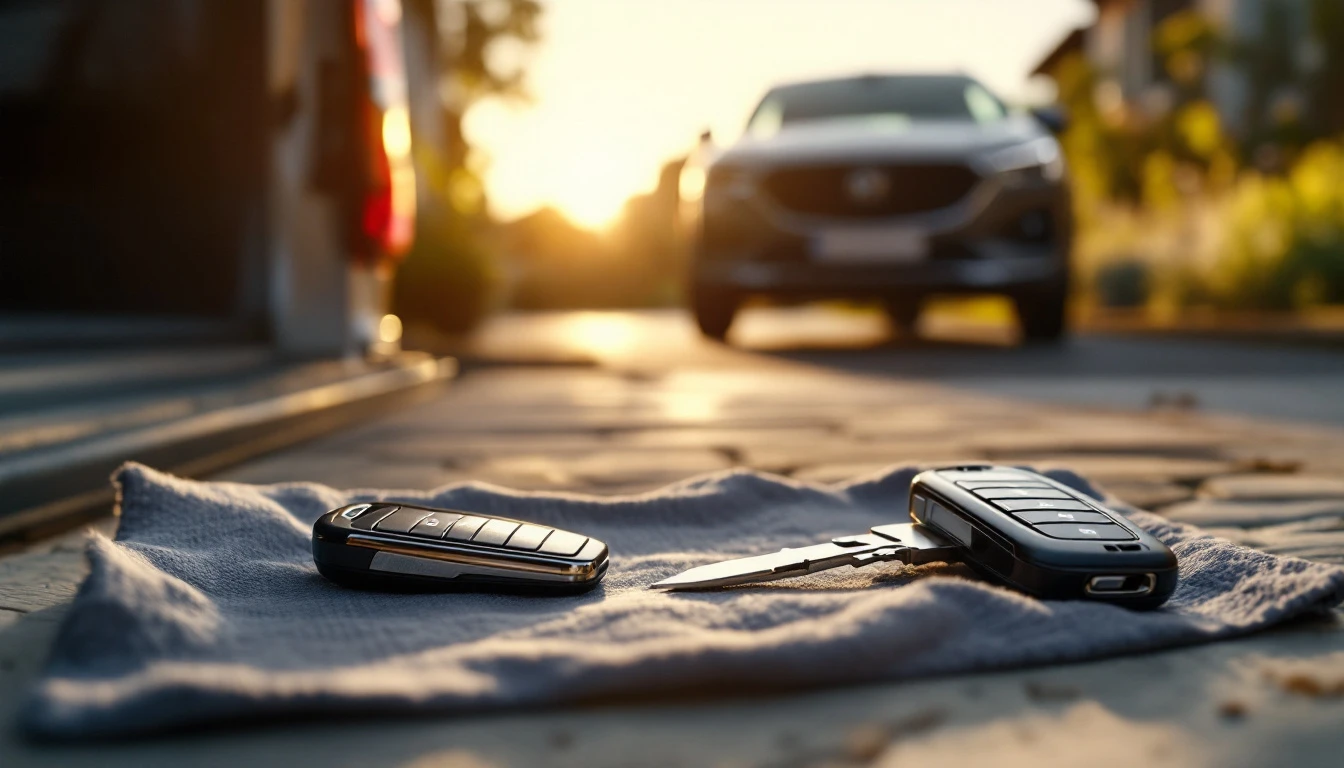
Why the second key is cheap and the replacement key is not
Every immobilizer job divides into two categories that have almost nothing in common operationally. In the first, the vehicle already trusts a credential you can hand the technician; the new key is added through the diagnostic port in a routine that takes minutes. In the second, no trusted credential exists, and authority has to be established from outside the vehicle through gated channels.
That second path is why all-keys-lost costs more everywhere, on every make. It is not a surcharge for your bad luck. It is a longer procedure, more restricted access, mandatory proof-of-ownership handling, and considerably more time on site — typically 60 to 110 minutes rather than 20 to 40.
On a 2022–2026 Santa Cruz or Tucson the practical consequence is a swing of roughly $130–$220 between the two scenarios for the same physical fob. The spare you buy on a Tuesday afternoon is the cheapest version of a key you will ever buy for that vehicle.
There is a second, quieter cost to having one key: the day it fails, the car is immobile. A Santa Cruz with two keys and a dead fob battery is a minor annoyance. A Santa Cruz with one key and a dead fob battery in a car park at 9pm is a tow, a recovery job, and a lost evening. Our all-keys-lost guide covers what that scenario actually involves.
What is inside a 2022–2026 Hyundai smart key
The fob on these model years is a proximity smart key: it carries a transponder that authenticates to the immobilizer for drive authority, a radio transmitter for lock, unlock and tailgate or remote-start functions, and it participates in passive entry so the handles respond with the key in your pocket. Every one of those is a separate registration inside the car.
Concealed in the fob body is a mechanical emergency blade, and the driver door has a physical cylinder for it. That blade needs to be cut to the vehicle's factory code — a spare key with a correctly registered transponder but an uncut blade is only three-quarters of a spare, and the missing quarter is exactly the part you need on the day the fob battery dies.
Trim matters for the fob variant. Higher trims across both vehicles carry additional remote functions, and a Santa Cruz configured with remote start uses a fob that supports it. A key sourced against your VIN carries the correct feature set; a key sourced against “a 2023 Tucson” may not, and the mismatch usually surfaces as a button that does nothing.
Both OEM-branded fobs and quality aftermarket equivalents from recognised trade suppliers program identically on this platform. The horror stories attached to the word “aftermarket” almost always trace to the cheapest marketplace listings with weak transponders and poor button pads, not to trade-sourced parts. Ask which your quote assumes; a straight answer is a good sign.
Grand Prairie pricing for a Santa Cruz or Tucson key
Spare proximity smart key, working key present: $190–$300 all-in, including the fob, the cut emergency blade, all registrations, and the mobile trip. All-keys-lost: $320–$520. Second key programmed during the same visit: 30–50% of the first — on an all-keys-lost job specifically, closer to a third, because the expensive part of the work is already complete.
Emergency blade cut only, no electronics: $45–$85, which is a legitimate half-measure if budget is genuinely tight. It will not start the car, but it will get you into the cabin, which converts a tow into an inconvenience.
Where you land inside those bands depends on model year, trim, fob variant and part sourcing — not on how urgent your situation sounds on the phone. Any quote that moves upward after the technician sees your car should be explained in those terms or refused. Our Grand Prairie key replacement cost page and the broader 2026 cost guide set out the same bands across other makes.
On bait pricing: an advertised “$29 car key” is not a price for a programmed proximity fob and never has been. The FTC's locksmith scam guidance describes the pattern precisely — a low phone number, an on-arrival revision, and pressure applied to somebody who is already stranded.
What the appointment looks like
A spare-key visit for either vehicle runs 20–40 minutes. The technician confirms VIN and trim, verifies ownership, and asks how many keys exist and where they physically are. The emergency blade is cut to factory code from the VIN. The diagnostic tool connects at the OBD-II port, and the new fob is registered for immobilizer authority, remote functions, and passive entry.
Then it is verified — and this is the step that separates a finished job from a job that generates a callback. The correct verification is done with every other key out of range: engine start on the new key alone, remote lock and unlock at realistic distance, passive entry at each door that has it, plus the tailgate on a Tucson and the bed and tailgate functions on a Santa Cruz where fitted.
An all-keys-lost visit on the same vehicles runs 60–110 minutes and starts with document handling. Proof of ownership is mandatory, not a formality: photo ID plus title, registration, or insurance matching the VIN. A technician who does not ask for it is a technician who would help somebody else take your vehicle, which should end the conversation.
Before that, a competent technician runs a pre-flight check, because a real share of “lost key” calls are not lost keys. On this platform the usual false alarms are a coin cell too weak to transmit, water damage to the fob, and trust lost after a jump start or a flat 12-volt — the last of which is a relearn rather than a new key.
Santa Cruz and Tucson: same key work, different owners
The Santa Cruz occupies an unusual position — a unibody compact pickup bought largely by people who wanted a crossover that can carry mulch and a bike. In Grand Prairie that means it lives outdoors, gets loaded at hardware stores off Carrier Parkway and I-20, and spends time at job sites and trailheads where a key gets set down on a tailgate and forgotten.
The Tucson is the higher-volume vehicle by a wide margin and behaves like the family car it is: school runs, commutes toward Arlington and Irving, and long stretches parked in apartment lots. Its failure pattern skews toward fob batteries and worn button pads rather than dramatic loss.
Both share the same practical advice. The bed of a Santa Cruz and the boot of a Tucson are both excellent places to lose a key into for twenty minutes, and both vehicles are big enough that a fob can slide under a seat and stay there. Before booking any all-keys-lost job, search the vehicle properly — it is free and it works more often than people expect.
The other shared reality is heat. North Texas summers are hard on coin cells and on the adhesive holding button pads together. A fob that has become intermittent in August is usually telling you about its battery, not about the car. Our guide on key fobs that stop working covers the diagnosis order.
The case against waiting until you need it
Households postpone a spare key because nothing is currently wrong, and that reasoning is exactly why the replacement market exists. The cost difference is knowable in advance: roughly $190–$300 today against $320–$520 later, plus the disruption of the day it happens.
Add the situational cost. All-keys-lost calls arrive disproportionately at night, in car parks, at airports, and on weekends — because that is when people are away from home and away from routine. A spare key at home converts almost every one of those events into a taxi ride and a normal Tuesday.
There is also a resale argument that owners consistently underrate. A used vehicle presented with a single key invites a deduction from any informed buyer, and the deduction is usually larger than the cost of the key. Two keys and a cut emergency blade is a small, cheap piece of documentation that the car has been looked after.
Where should the spare live? Not on the same ring, not in the same handbag, and ideally not in the vehicle. A drawer at home, or with a partner, or at a workplace. The point of a spare is that it is somewhere the first key is not — and if you have a proximity fob spare kept indoors, keep it away from the front door and away from the vehicle to avoid relay-style theft exposure.
Mobile versus dealer for a Hyundai spare
Hyundai is a well-supported platform for credentialed mobile shops, and the structural case is straightforward: no tow is required even for all-keys-lost, parts come through trade channels rather than a manufacturer parts counter at list price, and same-day service beats a scheduled appointment for anyone whose vehicle is a daily necessity. AAA repair-cost research puts the avoided tow among the largest structural savings on any immobilised-vehicle job.
The dealer wins on warranty work, on recall or campaign work that must appear in the manufacturer's records, and on a small set of very recent configurations requiring manufacturer-side authorisation. A shop that names those categories rather than claiming “any Hyundai, any year” is the shop to call — vehicle-specific coverage verified against your VIN is the whole discipline. The access framework itself is maintained by the National Automotive Service Task Force.
In Texas, locksmith licensing is administered by the Department of Public Safety Private Security Program — not by TDLR, despite what a surprising number of directory listings claim. Asking for a licence number is reasonable and takes five seconds to answer.
For a comparable premium-brand version of this same spare-key decision, see our Genesis GV80 and G70 spare key guide; for the full dealer comparison, our locksmith versus dealership breakdown.
A Real-World Example
Operator: A Grand Prairie contractor bought a 2023 Hyundai Santa Cruz used from a private seller and received exactly one smart key. He booked a spare eleven months later, after a near-miss in which the single fob spent forty minutes unaccounted for at a supply yard off Carrier Parkway.
Before:
- Vehicle purchased with a single proximity key and no cut emergency blade spare
- Owner had priced a replacement fob only after loss, quoted in the $400s by two shops
- Daily use involved loading and unloading at job sites where the key regularly left his pocket
What changed:
The mobile technician confirmed VIN and trim, cut a new emergency blade to factory code, and registered a second proximity fob matched to the vehicle's remote-start-equipped configuration. Verification was performed with the original key locked inside the house: engine start on the new fob alone, remote lock and unlock at distance, passive entry at both front doors, and tailgate function.
Results:
- Time on site: 26 minutes
- Total billed: $235 for the spare proximity key programmed and verified
- Emergency blade cut and confirmed to work in the driver door cylinder
- Owner quoted $380–$450 by the same shop had the job been all-keys-lost instead
Net: The spare cost roughly $150–$200 less than the identical fob would have cost after a loss, and removed the scenario in which a work vehicle is immobilised at a supply yard on a Friday afternoon. The emergency blade — often skipped by owners buying a spare — is what converts a dead fob battery from a tow into a five-minute inconvenience.
What Experts Say
“I have never had somebody call me for a spare key and later tell me it was a waste of money. I have had a great many people call me at eleven at night from an airport car park and tell me they had been meaning to get one. The price difference is not a penalty for losing your key — it is that the two jobs are genuinely different work. With a key in my hand I am adding a credential the car already trusts. With no key I am establishing authority from outside, with documentation, through a gated process, and it takes me three times as long. Same fob in the box either way. The customer chooses which version of the job they buy, and they choose it months in advance without realising it.”
Per ALOA's automotive certification standards and the NASTF vehicle security access framework, key-addition procedures performed with an existing trusted credential and all-keys-lost procedures are separate operations with different access requirements, documentation obligations, and labour profiles — which is the structural reason the two are priced differently across every make.
Frequently Asked Questions
How much is a spare key for a Hyundai Santa Cruz or Tucson in Grand Prairie?
As of August 2026, a spare proximity smart key programmed on site with a working key present runs about $190–$300 all-in, including the fob, the cut emergency blade, every registration, and the mobile trip. The same key after all keys are lost runs $320–$520 because that is a longer, differently accessed job.
Does the spare key need the metal blade cut as well?
Yes, and it is worth insisting on. The blade hidden in the fob opens the driver door when the fob battery is dead or the vehicle has no power. A spare with a registered transponder but an uncut blade fails you in exactly the situation where the spare matters most. Blade-cut-only, with no electronics, is $45–$85 if budget is very tight.
Will an aftermarket fob work on a 2022-2026 Tucson?
A quality aftermarket fob from a recognised trade supplier programs identically to an OEM-branded one on this platform. The failure stories almost always trace to the cheapest marketplace listings with weak transponders and poor button pads. Ask which your quote assumes — a shop that answers plainly is a shop worth booking.
How long does programming a Hyundai spare key take?
Twenty to forty minutes on site with a working key present. All-keys-lost runs 60 to 110 minutes and begins with proof-of-ownership handling: photo ID plus title, registration, or insurance matching the VIN. No tow is required in either case — the work happens where the vehicle is parked.
My Tucson key works sometimes and not others. Do I need a new one?
Usually not. Intermittent behaviour in North Texas summer heat is almost always a coin cell that measures acceptably at rest and sags under transmission load. Replace the battery first. If a fresh cell does not fix it, worn button pads or water damage are the next candidates, and a shell or pad transplant reusing your existing board needs no programming at all.
Where should I keep the spare key?
Somewhere the first key is not — a drawer at home, with a partner, or at a workplace. Not on the same ring and not inside the vehicle. If it is a proximity fob kept indoors, keep it away from the front door and away from where the vehicle parks, which reduces exposure to relay-style signal attacks.
The Bottom Line
A spare smart key for a 2022–2026 Hyundai Santa Cruz or Tucson is $190–$300 programmed in your Grand Prairie driveway as of August 2026, against $320–$520 for the identical fob once the last key is gone. Same part, same vehicle, different job — and the cheaper version is only available while you still have a working key. Get the emergency blade cut at the same time; it is the part that saves you a tow.
Next Steps
Call (214) 949-1847 with your VIN, model year and trim, and how many keys you currently have. See Hyundai key replacement Grand Prairie, car key replacement, and proximity key programming for the underlying services.
Sources cited in this article
- Associated Locksmiths of America (ALOA) certification
- National Automotive Service Task Force (NASTF)
- AAA roadside assistance and repair-cost research
- FTC consumer guidance on locksmith scams
- Texas DPS Private Security Program
- SAE International vehicle security standards
- National Highway Traffic Safety Administration (NHTSA)
- U.S. Bureau of Labor Statistics OEWS data