Which Hyundai key system is in your Elantra or Kona?
Hyundai's immobilizer family is called SMARTRA — short for Smart Transponder. It is a small authentication module that sits between the key's transponder chip and the engine control unit. If SMARTRA doesn't recognize the chip, the starter may crank but fuel and spark are withheld, which is why a “cranks but won't start” Hyundai is very often a key problem and not a fuel-pump problem.
Elantra AD and earlier (roughly 2007–2020 depending on trim): most base and mid trims use a bladed key with an embedded transponder, either as a plain key or as a flip-key with an integrated remote. These are the friendliest Hyundais to service in a driveway. The blade is cut by code from the VIN, the transponder is written and learned through the OBD-II port, and a second key is normally in your hand inside 45 minutes.
Kona (2018–present) and Elantra CN7 (2021–present) with push-button start: these use a proximity smart key and a later SMARTRA generation. There is no metal blade turning a cylinder — the car authenticates the fob over a low-frequency field, and the emergency blade hidden inside the fob only opens the door. Programming is still OBD-II based on most trims, but all-keys-lost requires the security PIN, which a credentialed shop pulls by VIN through authorized channels rather than guessing.
A quick self-check before you call: if your key physically turns in a barrel to start the car, you are on the bladed side. If you press a button on the dash with the fob in your pocket, you are on the proximity side. Tell the dispatcher which one you have — that single sentence gets you a far more accurate quote.
Grand Prairie pricing for Hyundai Elantra and Kona keys
As of July 2026, honest mobile pricing across Grand Prairie, Arlington, and Irving looks like this. Bladed transponder key, spare with a working key present: $150–$230 including cutting, chip, and programming. Bladed transponder key, all-keys-lost: $220–$360, because the blade must be cut from VIN code and the module learn is longer. Proximity smart key (Kona, CN7 Elantra), spare with a working key: $190–$300. Proximity smart key, all-keys-lost: $280–$500.
Those ranges include the fob, the cutting, the programming labor, and the mobile trip inside the core service area. They do not assume a tow, because none of this work requires one — a properly equipped mobile technician does the entire job where the car sits. Compare that to the dealer route, where an all-keys-lost Hyundai means a flatbed to the service drive plus dealer-rate programming labor.
Two things move you toward the top of a band. First, ordering a single key instead of two — the first key carries almost all of the programming labor, so a second key at the same visit is typically 30–50% of the first. Second, after-hours and weekend dispatch, which carries a surcharge at every honest shop in DFW. If your Elantra is parked safely at home and you can wait until Tuesday morning, you will pay less. For a full cross-brand breakdown, see our Grand Prairie car key replacement cost guide.
The 2011–2021 no-immobilizer question — what it means for your key
Some Hyundai and Kia models built roughly between 2011 and 2021 with a turn-key ignition left the factory without an engine immobilizer at all. The National Highway Traffic Safety Administration and insurance-industry loss data documented the resulting theft pattern in detail, and Hyundai responded with a software upgrade campaign plus steering-wheel locks for affected owners.
For key work, this cuts both ways. On a genuinely non-immobilized Elantra, a replacement key is mechanical only — the blade has to be cut correctly and nothing has to be programmed, which is faster and cheaper. But it also means that key alone provides no theft protection, and it is worth asking whether your VIN falls under the anti-theft software campaign while you have a technician on site.
Be skeptical of any shop that quotes you full immobilizer programming on a car that has no immobilizer, or that tells you a plain cut key on an affected vehicle is “the same security as a chip key.” Neither is honest. A credentialed technician will check your VIN's build configuration before quoting, not after.
What happens on-site: the spare-key job
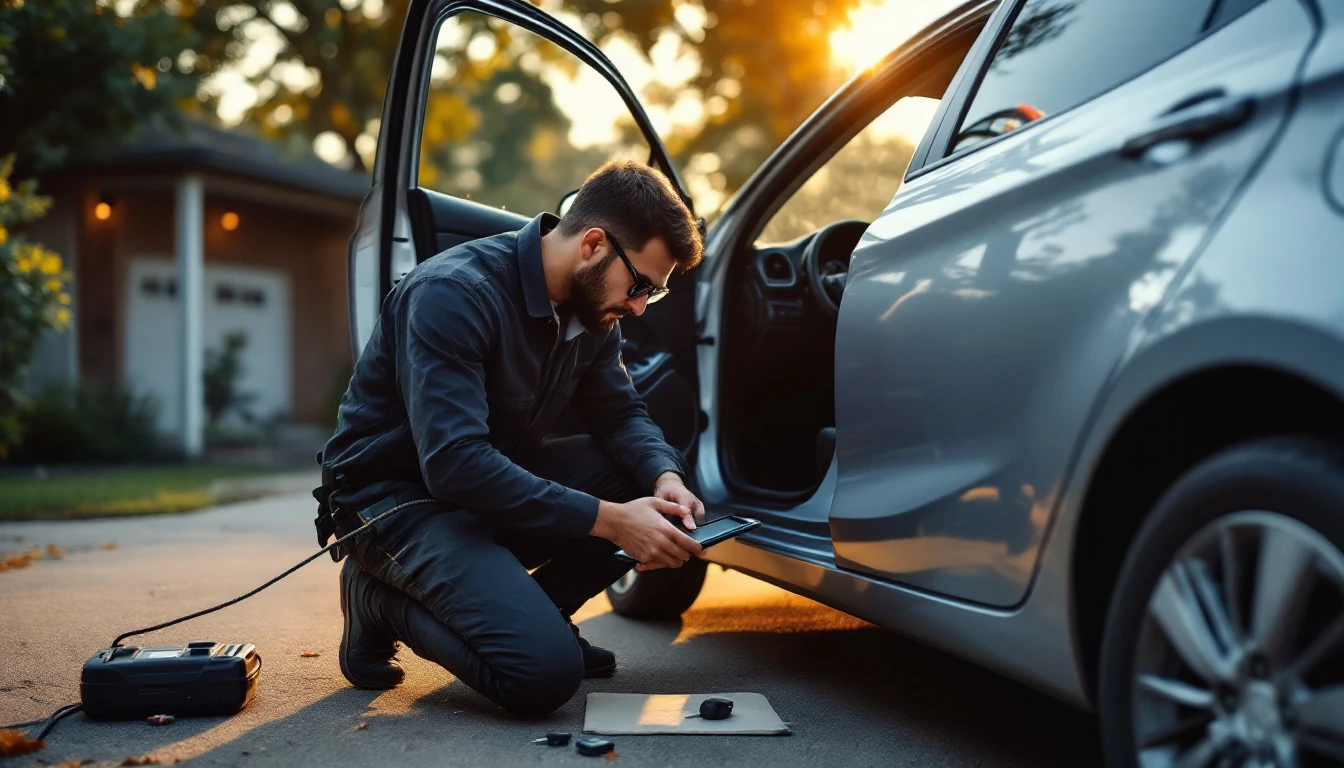
The straightforward case is one working key and a second one wanted. The technician confirms VIN and build, cuts the blade (or verifies the emergency blade for a proximity fob), then connects to the OBD-II port under the dash. Using the working key as the authorization credential, the immobilizer is put into learn mode and the new transponder is written into the SMARTRA key table.
On bladed Elantras, the whole sequence runs 20–40 minutes. On Kona and CN7 Elantra proximity systems, expect 30–50 minutes because the smart-key module and the body control module both need to acknowledge the new fob, and the rolling-code remote functions are verified separately from the start authorization.
Before the technician leaves, insist on the full functional test: lock, unlock, panic, trunk or tailgate release, remote start if equipped, and — the one people forget — start the car with the new key while the old key is nowhere near the vehicle. A fob that unlocks doors but doesn't authorize the engine is a half-finished job, and it is far easier to fix while the van is still in your driveway.
What happens on-site: all keys lost
All-keys-lost is a different job. There is no working credential to authorize the new key, so the technician has to establish authority a different way. On Hyundai that means retrieving the vehicle's security PIN by VIN through authorized channels, then running an add-key routine that the immobilizer will accept without a donor key. The National Automotive Service Task Force maintains the framework that gives licensed, vetted technicians legitimate access to that kind of security data — which is exactly why proof of ownership is not optional.
Expect to show a driver's licence and either the title, current registration, or insurance card matching the VIN. Any shop that skips that step on an all-keys-lost job is a shop you should not be handing your car to. Our Grand Prairie all-keys-lost guide walks through the documentation and the diagnostic sequence in more depth.
Total time on site is typically 45–90 minutes for a bladed Elantra and 60–120 minutes for a Kona or CN7 proximity system. A good technician also runs a pre-flight diagnostic first, because a surprising share of “lost key” calls are actually a dead fob battery, a failed remote, or a vehicle that lost immobilizer trust after a battery disconnect — all cheaper problems than a full key replacement.
Common Hyundai key and immobilizer problems we see in Grand Prairie
Elantra “key not detected” with a good battery. On proximity systems, a fob battery that reads fine at rest can still sag under load. Before assuming a failed fob, use the backup method — hold the fob against the start button, which lets the car read the transponder inductively rather than over radio. If that starts the car, you have a battery or antenna problem, not a lost-key problem.
Kona tailgate and remote functions that stop working while start still works. That split points at the remote-frequency side of the fob rather than the immobilizer side. Sometimes it is a cracked solder joint from a drop; sometimes it is the receiver. This is the diagnosis we cover in our keyless entry repair service page.
Worn blade on high-mileage Elantras. A ten-year-old Elantra key that has to be jiggled in the door is a key wear problem more often than a cylinder problem. A freshly cut blade to factory code usually resolves it for a fraction of a cylinder rebuild — but if the cut key still binds, you are into genuine ignition repair territory.
Post-jump-start no-start. Deep voltage sag during a jump can leave the body control module and immobilizer out of sync. The fix is usually a relearn, not a new key. Worth ruling out before you pay for parts.
Where the honest boundary sits
Most Elantra and Kona work is well inside mobile-locksmith capability. The honest boundary is at the newest end. Very recent Hyundai and Genesis models with Digital Key phone-as-a-key functionality, and certain trims where the smart-key module is paired to the vehicle at the factory, can require manufacturer-side authorization steps that a credentialed shop will confirm against your specific VIN before dispatch rather than guessing on the phone.
The same applies if your Elantra has already been to another shop that attempted programming and failed. A partially written key table is a materially different job from a clean all-keys-lost, and any technician worth hiring will want to know that up front. Say so when you call — it changes the tooling that gets loaded into the van.
What you should never accept is a shop that promises “any Hyundai, any year, flat rate” sight unseen. Vehicle-specific coverage is the whole game in automotive key work, and confident vagueness is the single most reliable warning sign.
Mobile vs dealer for a Hyundai key in Grand Prairie
The structural case for mobile on Hyundai work is straightforward. There is no tow, because the technician comes to the car. Fob and blank sourcing runs through aftermarket trade channels rather than manufacturer parts counters at MSRP. And the labor is billed as a discrete job rather than as service-drive hours.
Per AAA roadside and repair-cost research, mobile automotive services consistently price below dealer service departments for equivalent work, and the gap widens on all-keys-lost specifically because that is where the tow enters the dealer's side of the ledger. A twelve-mile flatbed from Grand Prairie to a Dallas-area Hyundai dealer is real money before anyone touches the car.
The dealer still wins in a narrow set of cases: warranty-covered work, open recall or campaign work that has to be recorded in the manufacturer's system, and the small handful of very recent configurations that require manufacturer-side authorization. For everything else — which is the overwhelming majority of Elantra and Kona key jobs in this market — mobile is faster and cheaper. Our locksmith vs dealership comparison lays out the full decision tree. If you drive a European car instead, the same logic applies but the numbers are larger — see our Mercedes key replacement Grand Prairie guide for that end of the market.
What to have ready before you call
Five things make the quote accurate and the visit short. (1) The VIN, from the dash plate at the base of the windshield or your insurance card. VIN-based quoting is dramatically more accurate than year-make-model. (2) Whether you have a working key. This single fact moves the price band by two to three times. (3) Bladed or push-button start.
(4) Proof of ownership — licence plus title, registration, or insurance matching the VIN. (5) Where the car is and whether it is accessible. A car in a home driveway is a simpler dispatch than one in a gated apartment garage off Carrier Parkway, and knowing in advance avoids a wasted trip charge.
Ask for the all-in price in writing before the van rolls. Texas locksmith companies operate under the Texas DPS Private Security Program, and any licensed shop will identify itself and its licensure on request without hesitation. If a phone quote sounds implausibly low, the FTC's consumer guidance on locksmith scams describes exactly the bait-and-switch pattern you are about to walk into.
A Real-World Example
Operator: A Grand Prairie commuter with a 2019 Hyundai Kona SEL (push-button start) lost the only fob at a soccer field off Robinson Road on a Sunday. The car was in a home driveway, registration in the glovebox, no spare anywhere.
Before:
- Dealer path quoted: flatbed tow plus dealer-rate all-keys-lost programming plus OEM fob, with a Tuesday appointment at the earliest
- A Google Ads aggregator quoted a "$29 service call" but refused to put an all-in number in writing
- Credentialed mobile shop quoted $340 all-in, in writing, for one new proximity fob programmed in the driveway that afternoon
What changed:
Technician verified ownership against the registration, confirmed the SMARTRA generation by VIN, and ran a pre-flight diagnostic first — which ruled out a simple immobilizer trust loss and confirmed genuine all-keys-lost. Security PIN retrieved by VIN through authorized channels, new proximity fob written to the smart-key module, emergency blade cut to factory code, all remote functions verified with the customer watching.
Results:
- Time on site: 72 minutes, inside the 60–120 minute band for a proximity all-keys-lost
- Total billed: $340, matching the written quote exactly — no drilling fee, no "high-security surcharge"
- Vehicle drivable the same Sunday afternoon; no tow, no missed Monday commute
- Customer added a second fob at the same visit for $120 — roughly a third of the first-key price
Net: The second fob is the part worth copying. Adding it while the technician was already on site and already authorized cost about a third of what a future all-keys-lost call would. That is the cheapest insurance available to any Hyundai owner in Grand Prairie, and almost nobody buys it until after the expensive lesson.
What Experts Say
“Hyundai is one of the more predictable platforms we work on, and that predictability is exactly why the spare-key conversation matters. An Elantra owner who adds a second key while the first one still works is paying a low, boring price for a job with almost no risk. The same owner calling us at ten at night with zero keys is paying two to three times more for a job that takes twice as long and needs a PIN pull. Nothing about the car changed — only whether there was a working credential in the equation. On the Kona and the newer Elantra, that gap gets wider, not narrower.”
Per the National Automotive Service Task Force framework governing legitimate technician access to vehicle security data, and ALOA's automotive certification standards, all-keys-lost work is defined as a security event requiring documented proof of ownership — which is both a consumer protection and the reason it costs more than a routine add-a-key.
Frequently Asked Questions
How much does a Hyundai Elantra key cost in Grand Prairie?
As of July 2026, a bladed transponder key with a working key present runs about $150–$230 all-in mobile, and all-keys-lost runs about $220–$360. Push-button-start Elantras and Konas use a proximity fob: roughly $190–$300 for a spare and $280–$500 for all-keys-lost. Provide your VIN and say whether you have a working key for an accurate quote.
Can a locksmith make a Hyundai Kona key without the original?
Yes. A credentialed mobile locksmith can produce and program a Kona proximity fob with no working key present. It requires the vehicle security PIN retrieved by VIN through authorized channels, so you will need to show a driver's licence plus title, registration, or insurance matching the VIN. The job normally takes 60–120 minutes in your driveway with no tow.
Does my Hyundai actually have an immobilizer?
Not necessarily. Some Hyundai and Kia models built roughly 2011–2021 with turn-key ignitions left the factory without an engine immobilizer, a pattern documented by NHTSA and insurance loss data. On those cars a replacement key is mechanical only — cheaper and faster, but with no anti-theft benefit. A technician checks your VIN build configuration before quoting.
Why does my Elantra crank but not start with the key in it?
On an immobilizer-equipped Hyundai, that is a classic authentication failure: the starter turns but fuel and spark are withheld because SMARTRA does not recognize the transponder. Common causes are a damaged chip, a fob that lost pairing after a battery disconnect or jump start, or a failed antenna ring. A relearn often fixes it without a new key.
Is it cheaper to add a Hyundai spare key now or replace it later?
Adding a spare now is substantially cheaper — typically 30–60% of what the same vehicle costs on an all-keys-lost call, and a second key programmed during the same visit is often only 30–50% of the first key's price. The gap widens on push-button-start Kona and 2021+ Elantra models.
Do you come to me, or do I have to bring the Hyundai somewhere?
All of this work is mobile. The technician brings cutting and programming equipment to wherever the car is parked in Grand Prairie, Arlington, Irving, or Mansfield. No tow is required for any Elantra or Kona key job, including all-keys-lost — which is the main structural reason mobile prices below the dealer route.
The Bottom Line
Hyundai Elantra and Kona key replacement in Grand Prairie is one of the more predictable jobs in automotive locksmithing, and pricing reflects that: roughly $150–$300 for a spare and $220–$500 for all-keys-lost as of July 2026, with the bladed-versus-proximity split and the working-key question doing almost all of the work in deciding where you land. Have your VIN and proof of ownership ready, ask for an all-in written price, and add the second key while the technician is already there.
Next Steps
Call (214) 949-1847 with your VIN and whether you have a working key, and you will get a firm all-in number before anyone is dispatched. For the wider brand page see Hyundai key replacement Grand Prairie; for the underlying service see car key replacement and immobilizer programming. If you have no working key at all, read our all-keys-lost guide first.
Sources cited in this article
- National Highway Traffic Safety Administration (NHTSA)
- National Automotive Service Task Force (NASTF)
- Associated Locksmiths of America (ALOA) certification
- AAA roadside assistance and repair-cost research
- Texas DPS Private Security Program
- FTC consumer guidance on locksmith scams
- SAE International vehicle security standards
- U.S. Bureau of Labor Statistics OEWS data