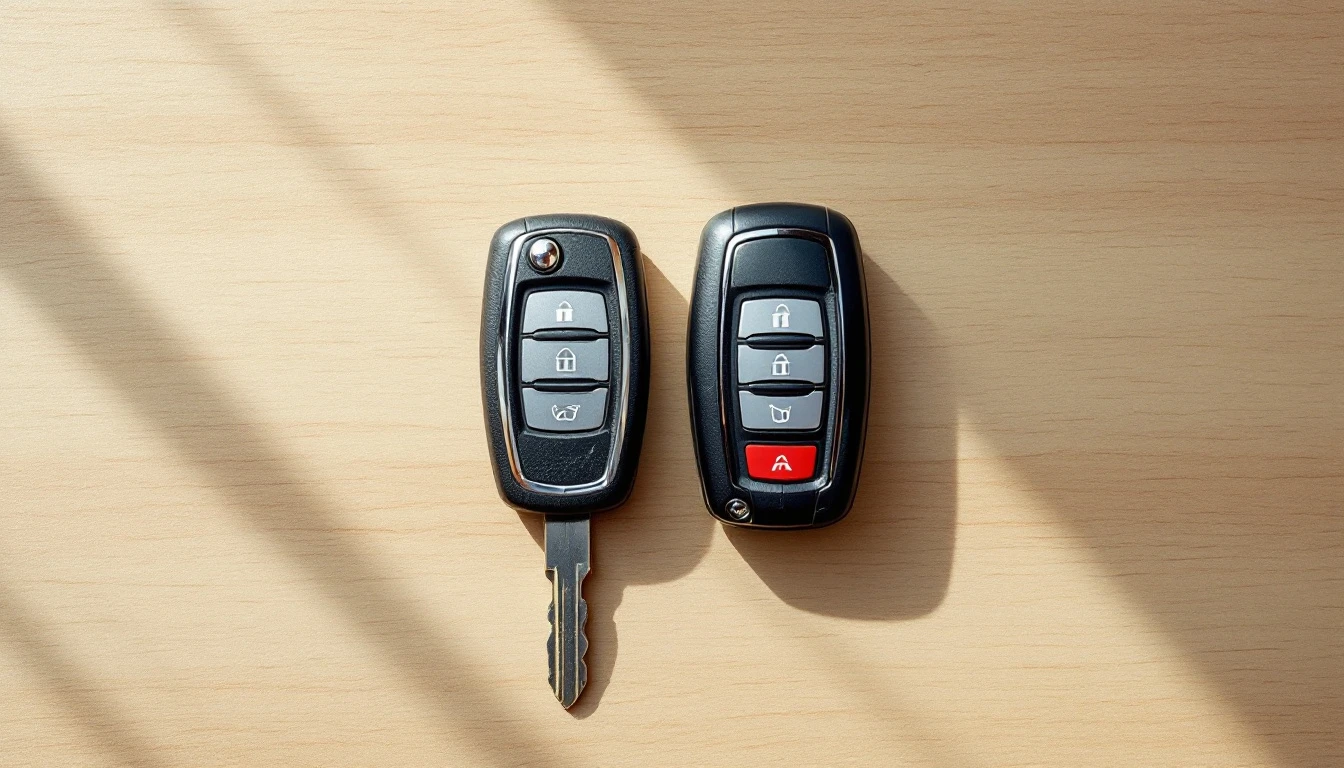
Why this symptom is genuinely reassuring
Start with what the symptom rules out, because it is a lot. If the vehicle's antenna, receiver, body control module or immobilizer had a fault, it would fail for both keys — those components have no way of knowing which of your keys is which until after they have received a signal. A vehicle-side problem is a both-keys problem, always.
So a fault that affects exactly one key is in that key, or in the record the car keeps of that key. That is a much smaller and much cheaper problem than most people assume when they discover it, and it is one of the few automotive faults where the diagnosis narrows itself before anyone has looked at anything.
The trap is not the repair. The trap is the delay. Almost every all-keys-lost job we attend in Grand Prairie began months earlier as exactly this: a spare that stopped working, got put in a drawer, and was never dealt with — leaving the household on a single point of failure until the day that single key was lost, washed, snapped or locked in something. The failure is cheap. The procrastination is expensive.
There is also a version of this that is not really a fault at all: the spare that has never worked, because it was cut from a hardware-store blank as a mechanical door key and the chip was never programmed. It opens the door and turns the ignition and the engine dies within two seconds. That is not a broken key, that is an unfinished one.
The five causes, in the order they actually turn out to be the answer
1. A flat coin cell in a key that never gets used. The favourite by a wide margin, and slightly counter-intuitive: a spare in a drawer drains slower than a daily key but it still drains, and nobody notices a gradual range decline on a key they never carry. So it does not fade for you the way a daily key does — it just appears dead the one time you reach for it. Match the number printed on the cell, mind the polarity, and do not touch the flat faces with your fingers.
2. The car forgot it after a 12-volt battery event. A flat battery, a disconnection for other work, or a jump start that browned out the electronics can all cost a vehicle its stored key registrations. Frequently the key you had in your hand at the time gets re-learned automatically through normal use while the one in the drawer does not, which produces exactly this asymmetry. The key is perfectly healthy and needs re-registering, not replacing. This is most pronounced on hybrids and EVs, where the 12-volt system is doing more work than people realise — the mechanism is set out in our Ioniq 5 and Ioniq 6 12-volt battery key relearn guide.
3. A blade that was copied rather than cut to code. If the spare was made at some point from your original rather than from the vehicle's factory code, it inherited every bit of wear the original had that day — and then the original kept wearing. Years later the two keys no longer match the lock in the same way, and the spare turns stiffly or not at all while the daily key is fine. The fix is a blade cut to the factory code retrieved from the VIN.
4. Physical damage or corrosion from storage. Drawers are not kind places. A key stored loose with coins and screws gets its contacts scratched, a fob that spent a summer in a hot glovebox can have a swollen or leaked cell, and a spare that went through a wash years ago may have been dried out and put away without ever being tested.
5. Deregistration by a previous programming job — the one nobody warns you about. On many platforms, adding a key writes the complete key set rather than appending to it. Any key not physically present at that appointment is erased from the vehicle's memory. So the spare in your kitchen drawer was silently deregistered the day somebody made you a new key, and the car has considered it invalid ever since. Nothing is broken; the vehicle has simply been told this key does not exist.
The driveway test that tells you which one you have
Test one — does anything happen at all? Press unlock on the spare with the doors locked. If the mirrors move or the lights flash, the fob is transmitting and the car is receiving; you are looking at a partial fault, not a dead key. If nothing happens at any distance, start with the coin cell.
Test two — separate the door from the engine. These are two independent systems, and which one fails is the most diagnostic thing available to you. Doors work but the engine will not start or dies immediately: the radio side of the key is fine and the immobilizer chip is the problem — a registration issue. Engine starts but the buttons do nothing: the immobilizer side is fine and the remote side is the problem. Both dead: coin cell first.
Test three — the two-second start. On a bladed key, if the engine fires and then cuts out after a second or two, that is the immobilizer doing precisely its job. It is not a fuel problem, an ignition-coil problem or a battery problem, and it is the clearest single signal in this whole article: the mechanical key is correct and the chip is not recognised.
Test four — on a proximity fob, use the backup coupling position. Every push-button-start vehicle has a marked spot where holding the fob lets the car read it by direct coupling with no radio involved — usually against the start button, sometimes in the console. If the car starts that way but not normally, the chip and the registration are fine and it is the fob's battery or radio side that has failed. That page of the owner's manual is worth finding before you need it.
Test five — the blade, on its own merits. Try the spare's blade in the driver door lock, gently. A blade that goes in stiffly, needs jiggling, or will not turn while the daily key is smooth is a cutting problem, not an electronics problem. Do not force it; a snapped blade in a door lock is a much worse afternoon.
What each outcome costs, and what a good shop does about it
Coin cell: a couple of dollars, two minutes, do it yourself. No competent shop charges a call-out for this.
Re-registering a healthy key: a fraction of the cost of a replacement, because there is no part involved — it is programming labour only. This is the correct outcome for causes 2 and 5, and it is the one most often skipped by a shop that goes straight to selling hardware. Ask explicitly whether your existing key can be re-registered before you agree to buy a new one. See car key programming.
Cutting a fresh blade to factory code: the low end of the key bands, because there is no programming involved if the chip is still registered. This is cause 3 and it is a genuinely cheap fix that leaves you with a spare better than the one you had, since it is cut to the vehicle's original specification rather than to a worn copy.
A full replacement key or fob, supplied and programmed on site: $150–$280 for a remote-head or flip key and $180–$320 for a proximity fob on a mainstream vehicle; $250–$420 for premium and European proximity fobs. The complete breakdown by fob type is in our 2026 key fob replacement cost guide.
And the number this is all measured against: $250–$550 for all keys lost on a mainstream vehicle, which is where you end up if the one remaining key goes missing before you deal with the spare. Our all keys lost guide covers what that job involves. Every figure above is an all-in mobile price at your address during normal weekday hours, as of August 2026.
The question to ask before any key job, because of cause five
Because some platforms write the complete key set rather than adding to it, the single most useful sentence you can say when booking any key work is: “I have another key at home — do I need to bring it?”
A shop that knows your platform will tell you straight away whether the procedure appends or overwrites. If it overwrites, every key you want to keep working has to be physically present at the appointment. If you leave one in a drawer, it will be erased, and you will discover this weeks later when you finally reach for it — which is exactly how thousands of perfectly good keys end up in kitchen drawers across DFW being quietly written off as broken.
This also works in the other direction and is occasionally what you want. If you have lost a key rather than broken one, overwriting the full set is a security feature: it deregisters the missing key so it can no longer start your car. Ask for it deliberately, especially if the lost key went astray with anything identifying where the vehicle is kept. It is a different request from “make me a spare” and you have to say it.
Expect to prove the car is yours either way. Photo ID plus title, registration or insurance matching the VIN on any key-making or key-registering job. The ethical handling of key origination is part of the certification standards published by ALOA, and a shop that waives that step for you would waive it for whoever asks about your car next. Texas locksmith licensing itself runs through the DPS Private Security Program — not TDLR, whatever the directory listings say.
Deal with it now, and the reason is arithmetic
A second key added while you still have a working one runs 30–50% of the first key's price, because the expensive part — establishing security access to the vehicle — is authorised by the key you already have. The same key originated after the last one is gone is a full all-keys-lost job at $250–$550 on a mainstream car, and considerably more on late-model European platforms.
That gap is not a sales argument, it is the structure of the work. Per AAA roadside and repair-cost research, the towing requirement on an immobilised vehicle is the largest single structural cost in dealer-routed key replacement — and a car with no working key is an immobilised vehicle by definition. A mobile shop avoids the tow, but it cannot avoid the extra hours of security work, and neither can you.
The other half of the arithmetic is time. A spare sorted on a Tuesday afternoon is a forty-minute appointment at your address. An all-keys-lost on a Saturday night is an emergency call-out with an after-hours differential of $20–$40 on top, at whatever moment your one key decided to go missing.
So the honest recommendation is unglamorous: test your spare today. Not when you need it — today, in your driveway, with the five tests above. Whatever it turns out to be, it is cheaper this afternoon than it will be the day it matters. And if the answer is a two-dollar battery, you are done. See key fob replacement, smart key programming, or car key replacement for what comes to the vehicle.
A Real-World Example
Operator: A Grand Prairie household with a 2019 Ford Escape found that their spare fob would open the doors but the vehicle refused to start with it, while the daily fob worked perfectly. The spare had been in a kitchen drawer since a key had been made for them roughly a year earlier.
Before:
- Spare unlocked the doors normally but the engine would not start with it
- Daily fob completely unaffected — full range, normal start
- The household had been treating the spare as broken and had budgeted for a replacement fob
What changed:
The split symptom answered the question before anyone touched the car: doors working means the radio side and the coin cell are both fine, and a no-start on that same fob isolates the fault to the immobilizer registration. That pattern, combined with the timing, pointed at the year-old key job — the procedure on that platform writes the full key set, and the drawer fob had not been present, so it had been erased that day. The existing fob was re-registered alongside the daily one, with both keys physically present.
Results:
- No parts purchased — the "broken" spare was electrically and mechanically perfect
- Programming labour only, a fraction of the replacement fob they had budgeted for
- Both keys registered together and verified: engine started on each with the other locked indoors
- The household went from one working key to two, without buying hardware
Net: The spare was never broken. It had been deleted by a previous appointment it was not invited to. That is why “do I need to bring my other key?” is the single most valuable question to ask when booking any key work — and why a fob that opens the doors but will not start the car is almost always a registration problem rather than a hardware one.
What Experts Say
“The drawer fob that does the doors but will not start the car — I see that every single week, and people have almost always already decided it is dead and priced up a new one. Nine times in ten it is a registration, not a part. Either the car lost its keys when the battery went flat, or somebody programmed a key a year ago and that one was not in the room, so it got wiped. Ask before you book: do I need to bring my other key. And test your spare on a day when you do not need it, because the folks I meet in a car park at midnight are almost always the ones whose spare stopped working six months ago.”
Per AAA roadside assistance and repair-cost research, an immobilised vehicle with no functioning key incurs a towing cost in the dealer-routed repair path before any programming labour is quoted — which is the structural reason a spare key added while a working key exists is a materially different job, and a materially different price, from a key originated after every key is lost.
Frequently Asked Questions
My spare key stopped working but my main key is fine. Is the car faulty?
No — and that is the useful part. The vehicle’s receiver, immobilizer and battery cannot tell your keys apart until after they have received a signal, so a vehicle-side fault always affects both keys. A fault that affects exactly one key is in that key or in the car’s record of it, which is a much smaller and cheaper problem.
Why would a key just stop being recognised?
The five common causes are a flat coin cell in a key that never gets used, a registration lost after the vehicle’s 12-volt battery went flat or was disconnected, a blade that was copied from a worn key rather than cut to factory code, storage damage or corrosion, and deregistration by a previous key-programming job that wrote the full key set while your spare was at home in a drawer.
My spare opens the doors but will not start the engine. What does that mean?
The remote side of the key is working and the immobilizer side is not, which isolates the fault to the transponder registration rather than the battery or the radio. On a bladed key the classic version is an engine that fires and dies after a second or two — that is the immobilizer working exactly as designed against a chip it does not recognise. It is a programming visit, not a parts purchase.
Can a previous locksmith visit have erased my spare key?
Yes, and it happens more than most people realise. On many platforms, adding a key writes the complete key set rather than appending to it, so any key not physically present at that appointment is erased from the vehicle’s memory. The fix is simply to re-register it with both keys present. This is why "do I need to bring my other key?" is worth asking before booking any key work.
Is it cheaper to re-register my old key than to buy a new one?
Considerably — it is programming labour with no part involved, a fraction of the cost of a replacement fob. Ask explicitly whether your existing key can be re-registered before agreeing to buy hardware. A shop that goes straight to selling a new fob without checking is not doing you a favour.
How much does a replacement spare cost in Grand Prairie if it really is dead?
As of August 2026, roughly $150–$280 for a remote-head or flip key and $180–$320 for a proximity fob on a mainstream vehicle, with premium and European proximity fobs at $250–$420 — all-in, cut and programmed at your address. That compares with $250–$550 for an all-keys-lost job if you wait until the remaining key is gone.
Should I get the lost key deregistered as well?
If a key is genuinely lost rather than broken, yes — ask for it deliberately. Overwriting the full key set removes the missing key from the vehicle’s memory so it can no longer start the car, which matters if it went astray alongside anything identifying where the vehicle is kept. It is a different request from "make me a spare" and you have to say it out loud.
The Bottom Line
A spare that has stopped working while the main key is fine means the car is healthy — a vehicle-side fault would break both keys equally. In order of likelihood it is a flat coin cell, a registration lost to a 12-volt battery event, a blade copied instead of cut to code, storage damage, or deregistration by a previous key job your spare was not present for. Most of those are programming labour or a two-dollar battery rather than new hardware. Test it today, in your driveway, on a day you do not need it — because the alternative is a $250–$550 all-keys-lost job at whatever hour your one remaining key chooses to disappear.
Next Steps
Run the five driveway tests above, starting with a fresh coin cell and the door-versus-engine split. If the spare opens the doors but will not start the car, it is a registration and not a part — call (214) 949-1847 with your year, make and model, and bring every key you want to keep working. See car key programming, smart key programming, and lost car key service.
Sources cited in this article
- AAA roadside assistance and repair-cost research
- Associated Locksmiths of America (ALOA) certification
- Texas DPS Private Security Program
- National Automotive Service Task Force (NASTF)
- National Highway Traffic Safety Administration (NHTSA)
- SAE International vehicle security standards
- FCC equipment authorization (FCC ID)
- FTC consumer guidance on locksmith scams