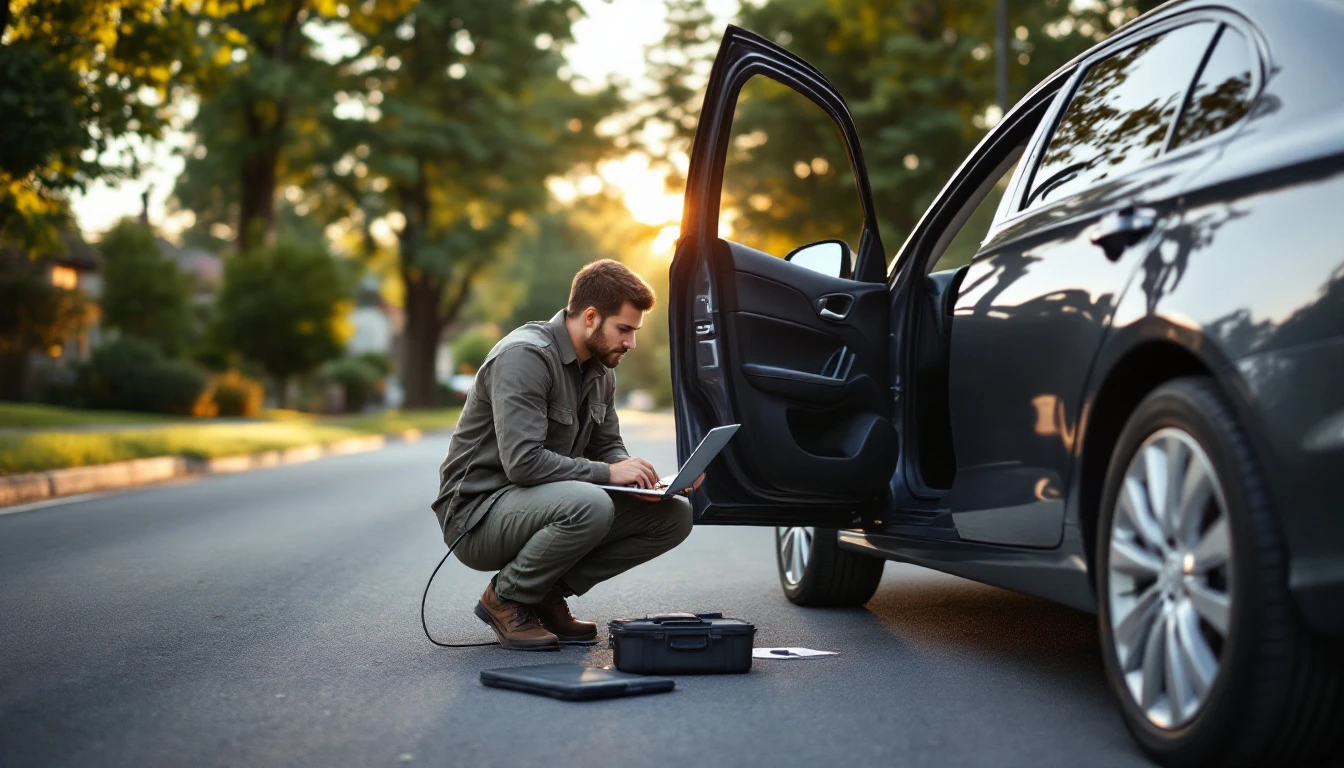
Why a discontinued flagship is a different job from a current model
The Azera and the Cadenza were the top of their respective ranges — full-size front-drive sedans with the equipment levels of a luxury car and the running costs of a Sonata or an Optima. They sold in modest numbers relative to the volume models, they were dropped from the US line-up as the market moved to crossovers, and the ones still on the road are largely well-kept second and third owners' cars.
From a key perspective the security architecture is entirely conventional: a proximity smart key, push-button start, passive entry, an immobilizer, and an emergency blade hidden in the fob. Programming one is not exotic and the procedures are well established. What is different is everything around the part.
Dealer parts availability has thinned. A discontinued model's fobs are no longer manufactured in volume for current production, so a dealer parts counter that would have had a Sonata fob on the shelf frequently has to order an Azera one. That is where the multi-day waits come from, not from the programming.
The remaining cars are older, which changes the failure profile. A 2016 Azera has had nine or ten years of coin cells, drawer storage, jump starts and 12-volt battery replacements. The keys on these cars fail from accumulated history rather than from any manufacturing issue — and accumulated history is exactly what produces a deregistered spare or an emergency blade that was never cut.
And there are fewer of them per shop. Any technician sees far more Sonatas than Azeras. That matters less than people fear on the programming side, because the platforms are shared, but it does mean it is worth asking a shop directly whether they carry the part or have to order it.
What the job actually involves on these two cars
With one working key present the new smart key is added through a procedure the vehicle already trusts. The technician verifies ownership, connects to the diagnostic port, authenticates using the existing key, writes the new fob into the vehicle's memory, cuts the emergency blade to the factory code retrieved from the VIN, and verifies everything in front of you. On a healthy car this is a driveway appointment measured in tens of minutes.
With no working key at all the same job becomes materially longer, because the security access that the existing key would have authorised now has to be established from nothing. This is the single largest variable in the whole of automotive locksmithing and it is why the first question any competent shop asks is whether you still have a key that works.
Verification is not optional and it is where corners get cut. A finished job on one of these cars means: the engine starts on the new fob with every other key well out of range, passive entry tested at each door that has it, the boot release tested, remote start tested where fitted, and the emergency blade physically tried in the driver door lock. A fob that unlocks the doors but will not start the car is an unfinished job, not a partial success.
Bring every key you want to keep working. Some procedures on these platforms write the complete key set rather than appending to it, which means a spare left at home in a drawer can be silently erased at the appointment. Ask before you book. Conversely, if a key has genuinely been lost rather than broken, overwriting the full set is the right call — it deregisters the missing key so it can no longer start the car.
Our smart key programming and immobilizer programming pages set out the equipment that comes to the vehicle.
The emergency blade, and why it matters more on these cars
Inside every Azera and Cadenza smart key is a small mechanical blade that releases from the fob body and opens the driver door. Most owners have never taken it out. On a nine-year-old car with an ageing 12-volt battery, it is the part most likely to be needed and least likely to work.
Here is the sequence that catches people. The 12-volt battery gets weak. One cold morning the car will not wake up, the door handles are dead, and the fob does nothing — because passive entry, the door handles and the receiver all run off that small battery, not off anything the engine can help with. The only way in is the emergency blade. And on a great many of these cars the blade in the spare fob was never cut, or was cut as a rough copy of a worn original years ago and no longer turns the lock.
Take two minutes today and check. Release the blade from each fob you own and try it in the driver door lock. If it goes in cleanly and turns, you are fine. If it will not go in, is visibly a blank, or needs forcing, get it cut to the factory code from the VIN — it is one of the cheapest things in this article, there is no programming involved, and it is the difference between a flat battery being an inconvenience and being a tow.
Do not force a stiff blade. A snapped blade inside a door lock on a discontinued model is a considerably worse afternoon than an uncut one, and the lock cylinder is another part that is no longer trivial to source.
The same logic applies to the vehicle's 12-volt battery itself. On modern cars, and particularly on well-equipped ones with a lot of standby load, a marginal 12-volt battery produces a family of strange electrical symptoms and keyless entry is usually the first to complain. The clearest illustration of the mechanism is in our Ioniq 5 and Ioniq 6 12-volt battery key relearn guide — the electrical architecture differs but the failure logic is identical.
2026 Grand Prairie pricing for the Azera and Cadenza
Every figure below is an all-in mobile price: fob supplied, emergency blade cut to your vehicle's factory code, all programming performed and verified at your address during normal weekday hours. There is no separate call-out fee inside the core service area.
Replacement smart key, one working key present: $180–$320.
All keys lost: $250–$550.
Second smart key taken at the same visit: 30–50% of the first, and closer to a third of it on an all-keys-lost job.
Emergency blade cut only (fob electronics healthy, blade uncut or badly copied): the low end of the key bands, since no programming is involved.
Re-registering an existing healthy fob that the car has forgotten after a 12-volt battery event or a previous key job: a fraction of a replacement, because it is labour with no part.
Evenings, weekends and overnight: add roughly $20–$40. Outlying addresses: $20–$50, disclosed when you book rather than on arrival.
For the same pricing organised by fob type across every make, see our 2026 key fob replacement cost guide. And be sceptical of any number far below these bands: per the FTC's consumer guidance on locksmith scams, an advertised price well under prevailing rates is a booking device rather than a quotation, with the real figure assembled on arrival once you have waited and have no alternatives.
Mobile versus dealer on a discontinued model specifically
On a current model the mobile-versus-dealer comparison is mostly about parts margin and labour rates. On a discontinued one, availability joins the list and it usually dominates.
The part. A dealer sells the smart key at manufacturer list through a parts counter and, for a model out of production, frequently has to order it. A credentialed independent sources an OEM-equivalent fob built to the same specification through trade channels, which on these cars is often the difference between same-day and next-week.
The tow, when every key is gone. A dealer needs the vehicle at the service drive, and an Azera or Cadenza with no working key cannot be driven there. Per AAA roadside and repair-cost research, that flatbed is the single largest structural cost on any immobilised-vehicle job, and it is incurred before any key work is quoted at all.
The calendar. A tow, a service appointment and a parts order on a discontinued model is commonly the better part of a week without the car. A mobile shop is measured in hours, at the address where the vehicle already sits.
Where the dealer genuinely still wins: warranty or goodwill work, recall and campaign work that has to be recorded in the manufacturer's system, and any configuration where programming access routes through manufacturer-side authorisation — the framework for which is maintained by the National Automotive Service Task Force. An honest shop names those boundaries instead of claiming every vehicle ever built. Certification standards for the technicians doing this work are published by ALOA, and Texas licensing itself runs through the DPS Private Security Program — never TDLR, whatever the directory listings claim.
What to do this week if you own one of these cars
Count your working keys. Not the keys you own — the keys that currently start the car. A fob in a drawer that has not been tested in three years is not a spare, it is a hypothesis. Test it: unlock, start the engine, and check passive entry at the doors.
Check the emergency blade in every fob. Two minutes, and the single most commonly neglected item on cars of this age. Uncut or badly copied blades are cheap to fix now and expensive to discover on a cold morning.
If you are down to one working key, add the spare now. On a discontinued model this argument is stronger than usual: a second key at the same visit is 30–50% of the first, and the part is the awkward bit to source, so doing it once with both fobs in hand is the efficient path. The alternative is a $250–$550 all-keys-lost job, potentially with a parts wait attached — see our all keys lost guide for what that involves.
Have the 12-volt battery load-tested if it is more than about four years old. Most keyless-entry weirdness on cars of this vintage traces back there, and it is a cheaper conversation than a key one. If the car has also started doing anything odd around the ignition switch itself, our Hyundai ignition repair guide covers the mechanical side of the same family of platforms.
When you call, have four things ready: year, model, whether you still have a working key, and ideally the VIN. That is enough for an all-in figure before anybody is dispatched. See Hyundai key replacement, Kia key replacement, or lost car key service.
A Real-World Example
Operator: A Grand Prairie owner of a 2016 Hyundai Azera had been running on one smart key since buying the car used three years earlier. The 12-volt battery went flat overnight in a driveway off Carrier Parkway and the car would not respond to the fob at all.
Before:
- One working smart key, no tested spare, since purchase
- Flat 12-volt battery left the door handles and receiver dead — the fob could not open the car
- The emergency blade in the fob had never been cut and would not enter the driver door lock
What changed:
With no mechanical way in and no electrical way in, the immediate problem was access rather than keys. Entry was made without damage, the 12-volt battery was jumped so the vehicle could be assessed, and the actual repair list turned out to be short: a battery at the end of its life, an uncut emergency blade, and no spare. The blade was cut to the factory code retrieved from the VIN, a second smart key was added at the same visit while the existing key was working and available to authorise it, and both were verified before the technician left.
Results:
- Vehicle opened without damage; no tow required despite the car being completely unresponsive
- Emergency blade cut to factory code — the fault that turned a flat battery into a lockout
- Second smart key added at 30–50% of the first because a working key was present
- Household moved from one untested key to two verified keys plus a working mechanical entry route
Net: The flat battery was not really the problem. The problem was that a nine-year-old car had one key, no tested spare, and an emergency blade that had never been cut — so an ordinary battery failure became a lockout. Two minutes with the blade, at any point in the previous three years, would have made it a jump start.
What Experts Say
“The Azeras and Cadenzas I see are lovely cars that have quietly become old cars, and almost every one of them has the same two problems: one key, and a blade in the fob that has never been cut. Nobody thinks about that blade until the twelve-volt goes flat, and then it is the only way into the car. Cutting it costs very little and there is no programming involved. And if you are down to one key on a model they stopped building, get the spare while the working key is there to authorise it — the fob is the part that takes time to find on these, not the programming.”
Per AAA roadside assistance and repair-cost research, towing is the largest single structural cost in the dealer-routed repair path for an immobilised vehicle and is incurred before any programming labour is quoted — a gap that widens on discontinued models, where parts availability adds calendar time to the dealer route that a trade-channel-sourced OEM-equivalent part avoids.
Frequently Asked Questions
How much does a Hyundai Azera or Kia Cadenza smart key cost in Grand Prairie?
As of August 2026, roughly $180–$320 for a replacement smart key supplied, cut and programmed at your address with one working key present, and $250–$550 if every key is gone. A second key taken at the same visit runs 30–50% of the first. An emergency-blade cut on its own sits at the low end of the key bands because no programming is involved.
Is a discontinued model harder to get keys for?
Harder to source, not harder to program. The security architecture on both cars is entirely conventional and the procedures are well established. What changes is parts availability: a dealer parts counter that stocks current-model fobs frequently has to order one for a model out of production, which is where multi-day waits come from. A trade-channel OEM-equivalent part usually avoids that.
What is the emergency blade in the fob for, and does mine work?
It opens the driver door when the vehicle has no power — which is exactly what happens when the 12-volt battery goes flat and the door handles, receiver and passive entry all stop responding. On cars of this age the blade is very often uncut or a worn copy that no longer turns the lock. Release it and try it in the door today; if it does not go in cleanly, have it cut to the factory code from the VIN.
Can you make a key if I have lost every key to my Azera or Cadenza?
Yes, on the driveway, with no tow. It is a longer job than adding a spare because the security access that a working key would have authorised has to be established from nothing, which is why it sits in the $250–$550 band rather than $180–$320. Bring photo ID and title, registration or insurance matching the VIN.
Do I need to bring my other key to the appointment?
Bring every key you want to keep working. Some procedures on these platforms write the complete key set rather than appending to it, so a spare left in a drawer at home can be erased at the appointment and need a separate visit to restore. Ask when you book. If a key has genuinely been lost, overwriting the set is the right call — it stops the missing key from starting the car.
My fob stopped working after the car battery went flat. Is the fob dead?
Often not. A vehicle can lose its stored key registrations after a flat battery, a disconnection, or a jump start that browned out the electronics, leaving a perfectly healthy fob that the car simply no longer recognises. Re-registering it is programming labour with no part involved — a fraction of the cost of a replacement. Ask for that to be checked before agreeing to buy new hardware.
Is it worth adding a spare key to a car this old?
On a discontinued model the case is stronger than usual, not weaker. A second key added while a working key exists is 30–50% of the first because the existing key authorises the work; the same key originated after the last one is lost is a $250–$550 job with a potential parts wait attached. The saving is largest precisely on the cars where the fob is the awkward part to source.
The Bottom Line
Keying a Hyundai Azera or Kia Cadenza is technically ordinary and logistically awkward: conventional proximity architecture, but a discontinued-model parts pipeline that turns a dealer visit into a multi-day wait. Expect $180–$320 with a working key present and $250–$550 with none, as of August 2026, all-in at your address. The two things worth doing this week cost almost nothing: test whether your spare actually starts the car, and release the emergency blade from every fob and try it in the driver door. On cars of this age that blade is the part most likely to be needed and least likely to have ever been cut.
Next Steps
Test your spare and try the emergency blade in the driver door today. If either fails, call (214) 949-1847 with the year, the model, whether you still have a working key, and ideally the VIN — you will get an all-in figure before anybody is dispatched, and bring every key you want to keep working. See Hyundai key replacement, Kia key replacement, and smart key programming.
Sources cited in this article
- AAA roadside assistance and repair-cost research
- Associated Locksmiths of America (ALOA) certification
- National Automotive Service Task Force (NASTF)
- Texas DPS Private Security Program
- FTC consumer guidance on locksmith scams
- National Highway Traffic Safety Administration (NHTSA)
- SAE International vehicle security standards
- FCC equipment authorization (FCC ID)